Minjar Fair in Chamba
Minjar is not just a town fair. It is Chamba's seasonal pulse made public: harvest symbolism, river offering, local dress, music, procession and a sense that the valley still knows how to gather itself.
By Himalayan Locals Editorial Team
If you want to see Chamba in a collective mood rather than in sightseeing fragments, Minjar is one of the best times to arrive. The valley stops behaving like a scenic district and starts behaving like a social body.
The Minjar fair is associated with nature's bounty and river offering, but what travellers often remember most is the density of local participation. The clothes feel right. The town feels inhabited from within. The event still carries the valley's own emotional scale instead of existing only for outsiders.
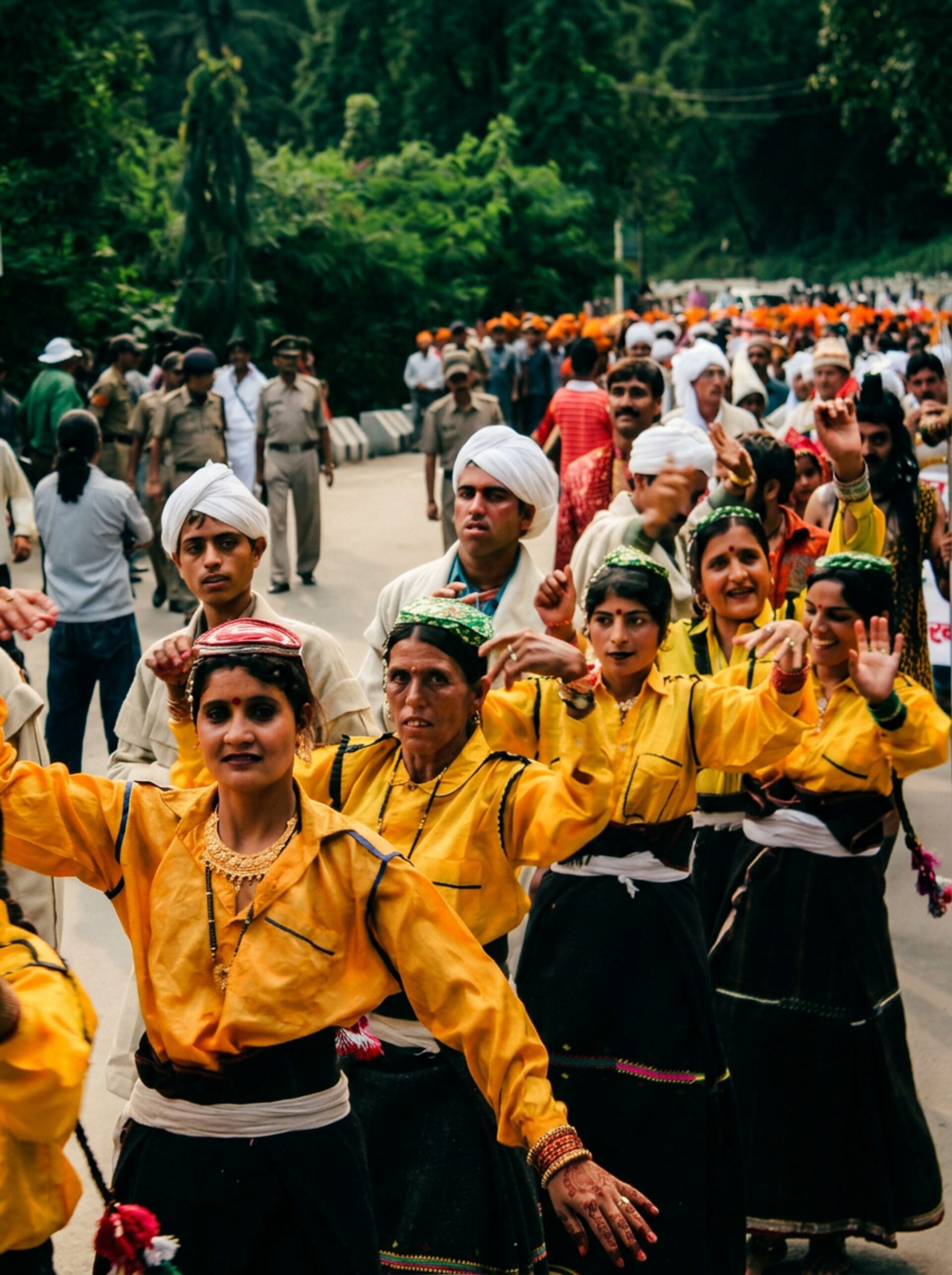
Why the Chamba valley communities story changes the trip
For visitors, the value of Minjar is not that it is colourful. Many festivals are colourful. The value is that it is deeply local without becoming closed. If you move attentively, you begin to see how market, ritual, dress, music, and social presence all overlap inside one Chamba frame.
The details that still make Chamba feel alive
- A harvest-linked Chamba celebration that still holds strong local meaning.
- A lively but rooted urban-valley festival rather than a purely tourism-facing event.
- An easy way to feel Chamba through processions, public space, and seasonal symbolism.
- A useful entry point into western Himachal culture before going further into Bharmaur or Pangi.
When this journey feels most worth doing
Minjar happens in the monsoon-facing part of the Himalayan year, so weather and town energy both need to be taken as they come. That is part of the charm. The fair works best for travellers who do not need every movement to be tidy.
What Chamba gives you beyond the obvious
The strongest version of this journey is rarely the one that tries to see the most in the least amount of time. It is the one that allows Chamba valley communities life in Chamba to become legible through repetition: one more walk, one more meal, one more conversation, one more hour spent noticing how the place holds itself when nobody is trying to impress you.
That is usually where the copybook idea of culture falls away and the real thing begins. You stop looking for a headline and start noticing pattern, mood, labour, and social intelligence. In Himalayan travel, that shift is often the difference between a pleasant route and a memorable one.
Why Chamba valley communities landscapes should not be consumed too quickly
Most travellers get this wrong in the same way: they arrive with a collecting instinct. They want one clean explanation, one culturally satisfying photograph, one short answer to what this region means. But Chamba is not built to reward that kind of speed. It asks for sequence, patience, and enough humility to let local life stay larger than your interpretation of it.
- Do not treat Chamba as a rare detour whose job is to deliver proof of authenticity.
- Do not confuse visual difference with cultural understanding.
- Do not let road ambition erase the slower social texture that makes Chamba valley communities life meaningful in the first place.
Travel like a guest, not a collector
Stay in Chamba instead of trying to day-trip the fair. Walk more than you drive. Watch how locals use the town during the festival. Let one or two good vantage points, food stops, and processional moments shape the memory rather than trying to consume every visible event.
For travellers who care about quality, the real upgrade is subtle. Better timing, fewer unnecessary stops, stronger local hosting, and more emotional space create a route that feels calmer and far more expensive in the right way. That is especially true in Chamba, where the atmosphere improves the moment the itinerary stops trying to prove itself.
Trips that pair well with this cultural angle
- Remote Chamba Circuit: Useful if you want to pair Chamba festival energy with a deeper mountain route beyond town.
- Pangi and Miyar Lens: Best for travellers who see Chamba as the doorway to a rougher and rarer Himachal.
Travel questions
What is Minjar Fair in Chamba?
Minjar is Chamba's major seasonal fair, associated with harvest symbolism, river offering, and a week of public celebration.
Is Minjar worth planning a trip around?
Yes, especially if you want Chamba to feel lived rather than simply viewed.
How should I experience Minjar well?
Stay in town, walk a lot, and treat the fair as a valley atmosphere rather than only as a checklist of events.