Losar and Village Culture in Spiti
Spiti is easiest to flatten into scenery. Losar season and village time make that impossible. They bring out the domestic, ritual, and winter-facing intelligence that keeps the valley alive.
By Himalayan Locals Editorial Team
Most people remember Spiti in terms of exposure: the open sky, the stark earth, the spectacular geometry. But the valley becomes much more interesting when you stop reading it as emptiness and start reading it through homes, rituals, winter logic, and village continuity.
Losar in Spiti, and the broader village culture around it, reveal a side of the valley that summer road trips can miss. This is where hospitality, food, prayer, and household routine become as important as any monastery facade or high-altitude view.
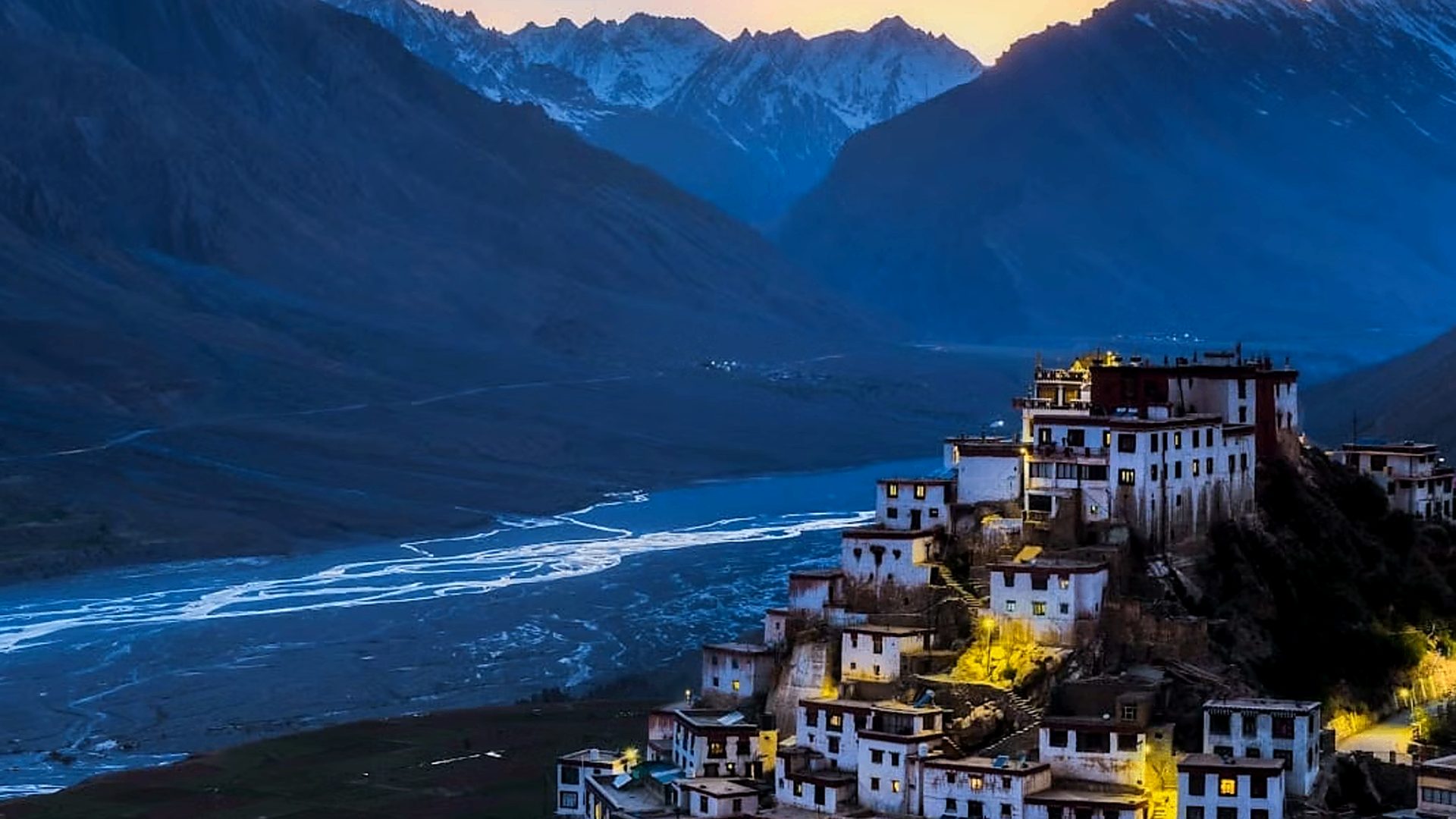
Why the Spitian story changes the trip
The strongest Spiti routes always make room for ordinary life. That could mean kitchens, barley fields, local conversations, winter preparation, or simply enough time in one village to notice how the day is structured. Festival time sharpens that awareness because domestic and ceremonial layers sit closer together.
The details that still make Spiti feel alive
- A trans-Himalayan valley whose emotional logic is often domestic before it is scenic.
- Festival and village rhythms that push back against the empty-moonland stereotype.
- A more honest route into Spiti than trying to treat every stop as a viewpoint.
- A travel style that rewards staying, listening, and eating locally more than constant movement.
When this journey feels most worth doing
Summer is easiest for access, but a culture-led Spiti trip can work across different parts of the year if the route is designed properly. Festival-timed travel around Losar gives extra depth, but even outside that period you can plan a village-first itinerary that resists the usual rush.
What Spiti gives you beyond the obvious
The strongest version of this journey is rarely the one that tries to see the most in the least amount of time. It is the one that allows Spitian life in Spiti to become legible through repetition: one more walk, one more meal, one more conversation, one more hour spent noticing how the place holds itself when nobody is trying to impress you.
That is usually where the copybook idea of culture falls away and the real thing begins. You stop looking for a headline and start noticing pattern, mood, labour, and social intelligence. In Himalayan travel, that shift is often the difference between a pleasant route and a memorable one.
Why Spitian landscapes should not be consumed too quickly
Most travellers get this wrong in the same way: they arrive with a collecting instinct. They want one clean explanation, one culturally satisfying photograph, one short answer to what this region means. But Spiti is not built to reward that kind of speed. It asks for sequence, patience, and enough humility to let local life stay larger than your interpretation of it.
- Do not treat Spiti as a rare detour whose job is to deliver proof of authenticity.
- Do not confuse visual difference with cultural understanding.
- Do not let road ambition erase the slower social texture that makes Spitian life meaningful in the first place.
Travel like a guest, not a collector
Stay in fewer places. Prioritise homestays, longer conversations, and monastery visits that are not crushed between long drives. If the trip becomes only about roads and drone shots, you will leave with scenery and miss the valley entirely.
For travellers who care about quality, the real upgrade is subtle. Better timing, fewer unnecessary stops, stronger local hosting, and more emotional space create a route that feels calmer and far more expensive in the right way. That is especially true in Spiti, where the atmosphere improves the moment the itinerary stops trying to prove itself.
Trips that pair well with this cultural angle
- Spiti with Locals: Best for travellers who want village time and not only the outer shell of the route.
- Kinnaur to Spiti Arc: Useful if you want a longer Himachal circuit that stays culturally textured throughout.
Travel questions
Is Spiti only about landscapes and monasteries?
No. The valley's real depth comes from village life, domestic rhythm, and the way people inhabit a severe landscape.
Is Losar a good lens for understanding Spiti culture?
Yes. Festival time makes many of the valley's household and ceremonial layers easier to feel.
How should I plan a culture-led Spiti trip?
Stay longer in fewer villages, choose homestays where possible, and avoid turning the whole route into a speed run.