Complete Ladakh Itinerary for 7 Days
A complete Ladakh itinerary for 7 days should not be a race. The best version balances acclimatisation, iconic landscapes, monastery time, and enough breathing room to actually enjoy the altitude.
By Himalayan Locals Editorial Team
A complete Ladakh itinerary for 7 days has one main job: to show you enough of the region to feel the scale, while still respecting the altitude and the road. Too many 7-day plans are written like checklists, with impossible jumps between Nubra, Pangong, monasteries, markets, and sunrise points. A better itinerary is calmer. It lands gently, lets the body adapt, and builds toward the dramatic sectors once you are ready for them.
This guide is designed for travellers who want a realistic Ladakh itinerary for 7 days rather than an aspirational one. It works well for first-time visitors, small groups, photographers, and travellers who want a premium road journey without losing the rawness of the landscape. You can adapt it for private travel, a motorcycle route, or a more curated SUV journey, but the logic should stay the same: acclimatise first, then widen the route.
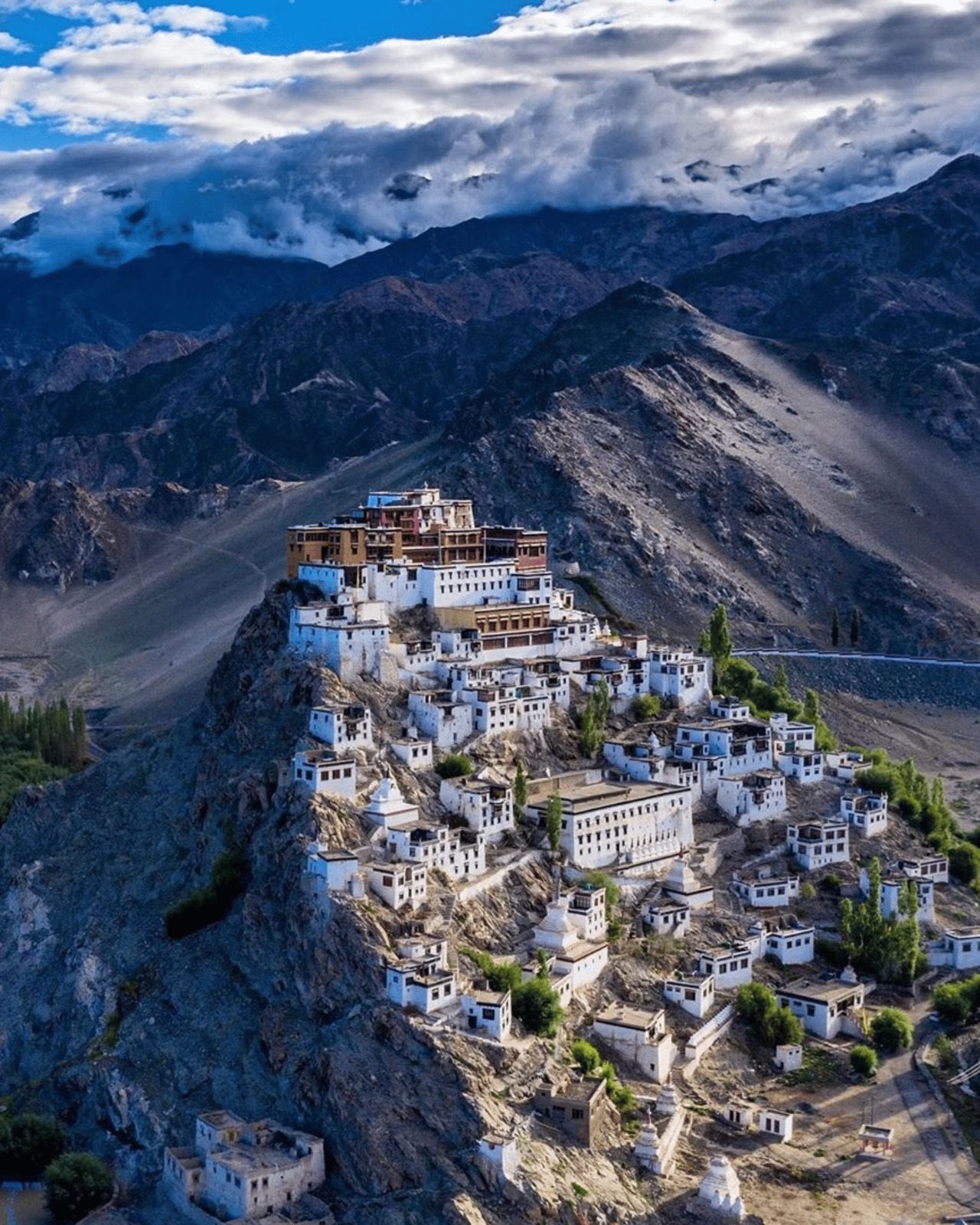
Do not spend Day 1 trying to prove anything
The most common mistake in a Ladakh itinerary for 7 days is trying to cover distance on the first day after arrival. Ladakh is not the place to behave as if energy and excitement can replace acclimatisation. The better approach is to keep Day 1 light: arrive in Leh, rest, hydrate, walk slowly, and keep your sights local. That one decision improves the rest of the trip more than any single photo stop ever will.
Suggested Ladakh itinerary for 7 days
Day 1: Arrive in Leh and take it slow
Arrive in Leh and rest at your accommodation. Do not schedule monasteries, viewpoints or long walks on arrival day. Ladakh Tourism advises at least 48 hours of complete rest before higher-altitude travel.
Day 2: Rest in Leh and complete the initial 48 hours
Continue resting in Leh on Day 2. Count 48 hours from your actual arrival time, rather than assuming two calendar dates are enough. Begin higher-altitude travel only after this period and if you are well; symptoms require medical assessment and a changed plan.
Day 3: Leh to Nubra Valley
This is where your Ladakh itinerary for 7 days begins to open properly. The drive into Nubra changes the emotional tone of the trip. You move from acclimatisation and local orientation into the great Himalayan road narrative: changing terrain, wider horizons, and that unmistakable sense of crossing into another basin of life. Arrive with enough time to settle in, not just to collapse into the stay.
Day 4: Explore Nubra well, not quickly
Do not reduce Nubra to a single sand-dune stop. Give it one full day. Let the valley breathe. Visit villages, monastery spaces, river sections, or the quieter stretches that make the region memorable. A rushed Nubra visit makes Ladakh feel like a surface-level drive-through. A properly paced Nubra day makes it feel dimensional.
Day 5: Nubra to Pangong
This sector is one of the most anticipated parts of a complete Ladakh itinerary in 7 days, and for good reason. Pangong has scale, contrast, and a visual stillness that photographs never quite capture. But it only feels powerful if you arrive with enough time and energy left. Do not over-schedule the crossing. Reach the lake, settle in, and let the evening do the work.
Day 6: Pangong to Leh
Return toward Leh with selected stops rather than a forced highlight parade. This is a good day for reflection, landscape pauses, and one or two worthwhile viewpoints. By now the trip should feel cohesive rather than crowded. The return day can be surprisingly beautiful because your eye is sharper and your body has adapted.
Day 7: Departure or slow closing morning
If flights and logistics allow, keep the final morning gentle. A last breakfast, a short walk, or a final old-town hour gives the itinerary a cleaner close than an early panic. Even in a short trip, endings matter. They shape how the whole route is remembered.
Trips built around this kind of Ladakh pacing
- 7 Days in Leh Ladakh: A close match for travellers who want a classic, well-paced first Ladakh journey.
- Trans-Himalayan Changthang & Nubra: For travellers who want a wider, more remote version of the Ladakh idea.
What not to force into a 7-day Ladakh plan
- Too many one-night stops with no emotional or physical breathing room.
- A full long-range circuit that tries to include every famous lake and valley at once.
- Aggressive first-day sightseeing before acclimatisation.
- Sunrise and sunset promises every day, which usually turn into fatigue rather than magic.
A complete Ladakh itinerary for 7 days should leave you wanting a second trip, not feeling like you survived a compressed one. The smartest version is not the one with the highest number of map pins. It is the one that respects energy, altitude, and the emotional pacing of the mountains. If you get that right, seven days is enough to make Ladakh feel profound rather than partial.
A short trip becomes stronger when every day has one clear purpose
A lot of seven-day Ladakh plans feel stressful because every day is overloaded with backup stops, secondary detours, and rushed photography promises. A better premium itinerary gives each day one dominant identity. One day is for acclimatisation and local culture. One day is for the move into Nubra. One day is for Nubra itself. One day is for Pangong. That clarity keeps the trip emotionally legible. You do not just remember locations; you remember chapters.
This is also where a good local team matters. The route can stay stable while still being responsive. If weather shifts, if a road sector needs rebalancing, or if the travellers are moving more slowly than expected, the trip can still hold its shape. That is the difference between a short trip that feels carefully run and a short trip that constantly feels at risk of collapsing under its own ambition.
A seven-day itinerary also improves when logistics are simplified. Fewer hotel changes, fewer forced wake-up calls, and fewer dramatic promises create a trip that feels cleaner and more premium. In the Himalayas, refinement is not about removing the wildness. It is about letting the wildness arrive without unnecessary friction around it.
When people say they want a complete Ladakh itinerary for 7 days, what they often really want is confidence: confidence that the route is enough, confidence that they will not miss the essence of Ladakh, and confidence that the trip will feel memorable rather than frantic. A strong seven-day plan gives exactly that. It trades unnecessary volume for better mountain timing.
How much Ladakh you can do well
| Duration | What it realistically suits |
|---|---|
| 7 days | Best for Leh, a local cultural day, Nubra, Pangong, and a cleaner first Ladakh circuit. |
| 8 days | Adds breathing room between sectors so the road feels less compressed. |
| 9 to 10 days | Lets you add monastery depth, a premium pace, or one more meaningful valley without flattening the route. |
Best route shape for a Ladakh road trip
The cleanest first-time structure is usually Leh first, then Nubra, then Pangong, and then a return toward Leh or the departure sector. That route handles altitude, road drama, and emotional pacing better than trying to begin with the hardest drive or the most remote lake.
Permits and practical route planning
If your itinerary includes Nubra, Pangong, Tso Moriri, Hanle, or Changthang-linked roads, permit handling should be sorted before the hard route days begin. The right team keeps the paperwork invisible so the journey still feels elegant.
Where stay style changes the whole trip
In Ladakh, a better stay is not only about comfort. It is about where the body gets to recover after the long road. Good properties, strong local hospitality, and calmer overnights can completely change how the same route feels on day four or five.
Vehicle recommendation and AMS safety
- Use a reliable SUV for private travel unless your main goal is a motorcycle-specific expedition.
- Do not schedule major lake sectors immediately after landing in Leh.
- Give older travellers, children, or first-time high-altitude guests more route softness, not more map ambition.
- Keep hydration, rest, and response time built into the plan from the beginning.
How to expand the route without making it messy
- Add one extra cultural day around Leh and nearby monasteries.
- Spend an extra night in Nubra or Pangong instead of turning every major stop into a one-night transit.
- Use the extra days for a more premium road rhythm rather than trying to conquer every famous map pin.
Travel questions
Is 7 days enough for Ladakh?
Yes, if you keep the route realistic and focus on Leh, Nubra, Pangong, and acclimatisation. It becomes much better when the itinerary avoids unnecessary one-night rush.
How many days are ideal for Ladakh?
For many travellers, 8 to 10 days is the sweet spot because it keeps the road exciting without making the altitude or drive time feel relentless.
Do I need permits for a Ladakh road trip?
Domestic tourist permit requirements were removed under Ladakh notification S.O. 30 of 6 August 2021, with security restrictions retained in some border pockets. Indian travellers should check current fee/registration requirements and carry ID. Foreign travellers need route- and nationality-specific Protected Area Permit approval where applicable.
What vehicle is best for Ladakh?
A well-maintained SUV with an experienced mountain driver is the safest and most comfortable choice for most travellers. Motorcycles work well only when the rider already understands long Himalayan road days and altitude fatigue.
How serious is altitude sickness in Ladakh?
Altitude illness can affect anyone. Ladakh Tourism advises at least 48 hours of complete rest in Leh before higher-altitude travel. Do not ascend with symptoms; seek medical assessment. Breathlessness at rest, confusion or difficulty walking require urgent help and descent.
Should I rent a bike or hire an SUV in Ladakh?
Hire an SUV with a capable local driver if comfort, family travel, premium pacing, or first-time confidence matter. Choose a motorcycle only if the road itself is central to the trip and the rider is properly prepared.