Johar Valley and the Shauka Memory of Trade
Johar Valley is not only a trekking corridor out of Munsiyari. It is also one of Uttarakhand's most important cultural landscapes, carrying the memory of Shauka trade, wool work, seasonal movement, and old Himalayan exchange.
By Himalayan Locals Editorial Team
When people talk about Munsiyari, they often stop at views and trekking. Johar Valley asks for a much older frame. This is a place where routes used to mean trade, return, risk, and cultural movement across a much larger mountain world.
The Shauka communities associated with the Johar belt are part of what gives the upper valley its depth. Villages, woven wool, seasonal memory, and the long shadow of trans-Himalayan trade all survive in fragments that are still readable if you travel carefully.
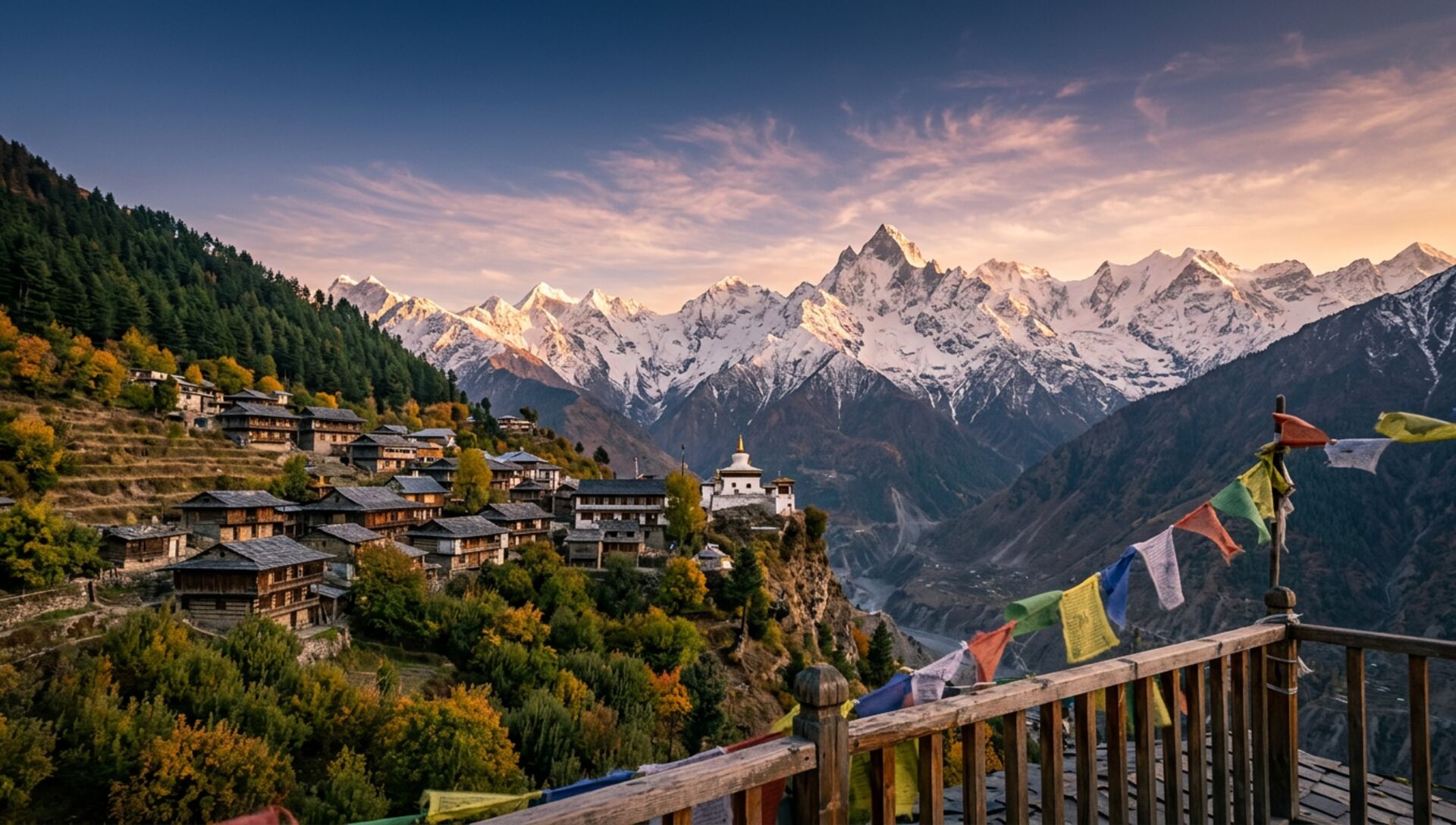
Why the Shauka story changes the trip
What makes Johar compelling is not nostalgia by itself. It is the way trade memory still shapes local identity and landscape feeling. Old routes, abandoned higher villages, handwoven work, and Munsiyari's position as a threshold all make the valley feel more historical than the average Uttarakhand mountain stay.
The details that still make Johar Valley feel alive
- A culturally significant upper valley linked with old trans-Himalayan trade networks.
- A route where weaving, mobility, and village memory matter as much as scenic drama.
- Munsiyari and the upper Johar belt offering one of Uttarakhand's most layered mountain identities.
- A better alternative for travellers who want depth beyond standard hill-station language.
When this journey feels most worth doing
Clear-weather months are the easiest for valley movement and wider views, but the best timing depends on whether you want trekking access, village stays, or a gentler cultural route built around Munsiyari and nearby settlements. Post-monsoon often feels especially articulate.
What Johar Valley gives you beyond the obvious
The strongest version of this journey is rarely the one that tries to see the most in the least amount of time. It is the one that allows Shauka life in Johar Valley to become legible through repetition: one more walk, one more meal, one more conversation, one more hour spent noticing how the place holds itself when nobody is trying to impress you.
That is usually where the copybook idea of culture falls away and the real thing begins. You stop looking for a headline and start noticing pattern, mood, labour, and social intelligence. In Himalayan travel, that shift is often the difference between a pleasant route and a memorable one.
Why Shauka landscapes should not be consumed too quickly
Most travellers get this wrong in the same way: they arrive with a collecting instinct. They want one clean explanation, one culturally satisfying photograph, one short answer to what this region means. But Johar Valley is not built to reward that kind of speed. It asks for sequence, patience, and enough humility to let local life stay larger than your interpretation of it.
- Do not treat Johar Valley as a rare detour whose job is to deliver proof of authenticity.
- Do not confuse visual difference with cultural understanding.
- Do not let road ambition erase the slower social texture that makes Shauka life meaningful in the first place.
Travel like a guest, not a collector
Do not treat Johar only as a trekking launchpad. Stay in Munsiyari or nearby for long enough to visit weaving villages, ask about older routes, and let the valley's sense of departure and return become part of the trip. The route is at its best when it feels remembered, not consumed.
For travellers who care about quality, the real upgrade is subtle. Better timing, fewer unnecessary stops, stronger local hosting, and more emotional space create a route that feels calmer and far more expensive in the right way. That is especially true in Johar Valley, where the atmosphere improves the moment the itinerary stops trying to prove itself.
Trips that pair well with this cultural angle
- Uttarakhand Cultural Extension: Useful if you want to expand a pilgrimage-heavy Uttarakhand trip into a more cultural mountain route.
- Broad Himalaya Circuit: A better fit if you want mountain regions compared through culture, not only through icons.
Travel questions
Why is Johar Valley culturally important?
Because it is tied not only to scenery and trekking, but also to older trade memory, weaving, and upper-valley community life.
Who are the Shauka in Johar Valley?
Shauka communities are closely associated with the Johar region and its historic trans-Himalayan trade identity.
How should I experience Johar Valley beyond trekking?
Stay around Munsiyari longer, visit village craft contexts, and ask about the valley's older movement and trade stories.