Marcha and Tolcha Villages near Niti and Mana
The upper Alaknanda and Niti-side highlands are often read only through pilgrimage or frontier drama. The Marcha and Tolcha Bhotia-linked village world offers a more human reading: trade memory, seasonal absence, return, and mountain edge life.
By Himalayan Locals Editorial Team
Mana is famous enough to be skimmed. Niti is remote enough to be mythologised. Both deserve a more grounded reading through the communities whose lives were shaped by trade, season, and borderland altitude long before modern route branding arrived.
The Marcha and Tolcha Bhotia-linked worlds of upper Uttarakhand sit inside some of the state's most dramatically narrated terrain. What often gets lost in that narration is the quieter reality of village adaptation, old trade orientation, and seasonal occupation near the edge of habitability.
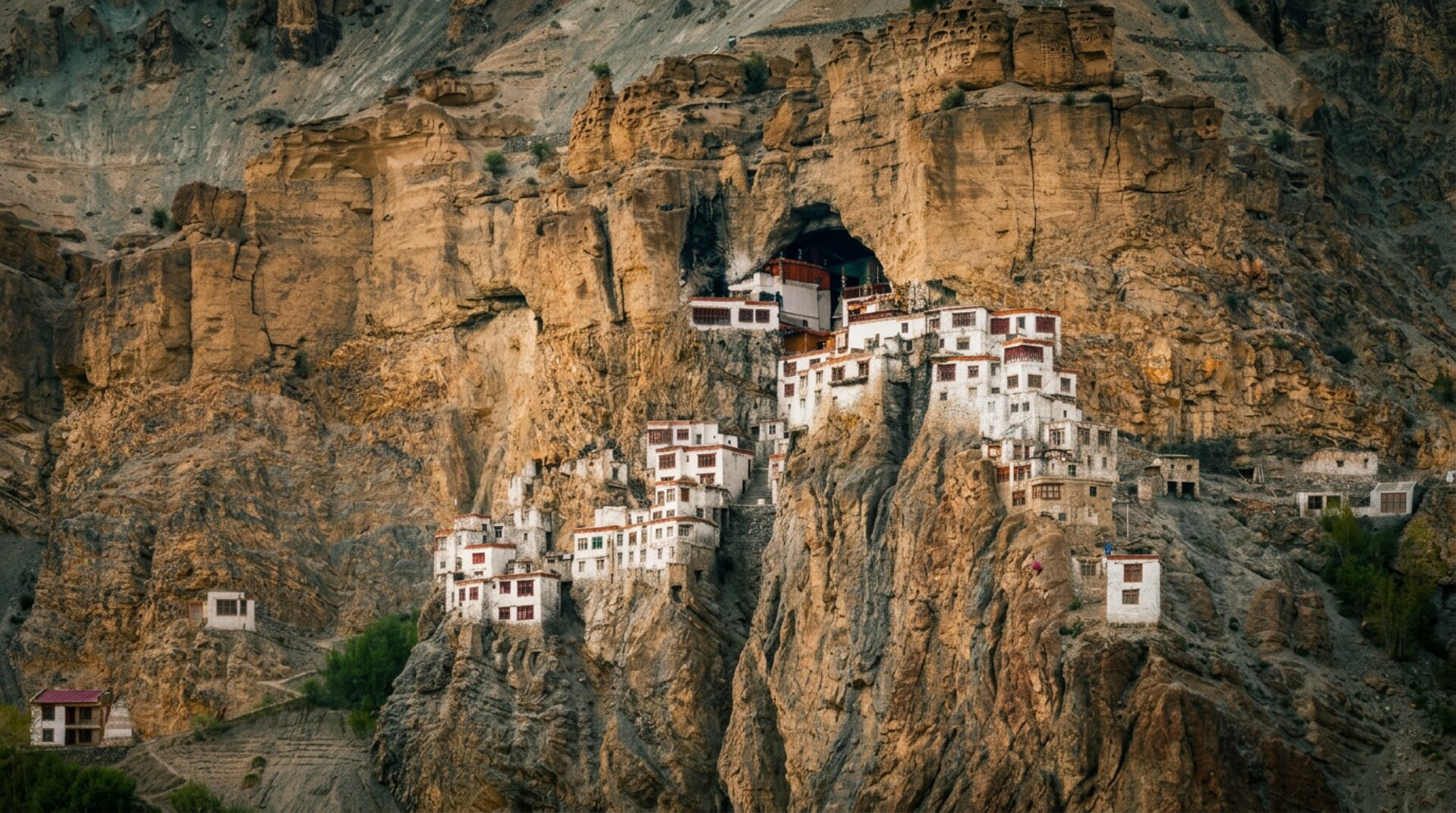
Why the Marcha and Tolcha story changes the trip
These villages are interesting not because they are 'last' or 'final' or close to a line on a map. They are interesting because they turn the idea of frontier into ordinary life: storage, departure, return, wool, route memory, and a long relationship with altitude.
The details that still make upper Alaknanda and Niti belt feel alive
- A borderland village world too often reduced to cliché about remoteness and finality.
- Older trade-linked memory still shaping how upper-valley settlements are understood.
- A richer cultural reading of Uttarakhand's high-altitude pilgrim corridors.
- A route that asks travellers to see the people of the upper valleys, not only the geography.
When this journey feels most worth doing
Open-road months matter here, especially if you want village access without fighting severe conditions. But timing should also reflect your route priorities: pilgrimage, cultural stay, or a higher, quieter extension. Shoulder-season clarity can make these landscapes especially powerful.
What upper Alaknanda and Niti belt gives you beyond the obvious
The strongest version of this journey is rarely the one that tries to see the most in the least amount of time. It is the one that allows Marcha and Tolcha life in upper Alaknanda and Niti belt to become legible through repetition: one more walk, one more meal, one more conversation, one more hour spent noticing how the place holds itself when nobody is trying to impress you.
That is usually where the copybook idea of culture falls away and the real thing begins. You stop looking for a headline and start noticing pattern, mood, labour, and social intelligence. In Himalayan travel, that shift is often the difference between a pleasant route and a memorable one.
Why Marcha and Tolcha landscapes should not be consumed too quickly
Most travellers get this wrong in the same way: they arrive with a collecting instinct. They want one clean explanation, one culturally satisfying photograph, one short answer to what this region means. But upper Alaknanda and Niti belt is not built to reward that kind of speed. It asks for sequence, patience, and enough humility to let local life stay larger than your interpretation of it.
- Do not treat upper Alaknanda and Niti belt as a rare detour whose job is to deliver proof of authenticity.
- Do not confuse visual difference with cultural understanding.
- Do not let road ambition erase the slower social texture that makes Marcha and Tolcha life meaningful in the first place.
Travel like a guest, not a collector
Do not rush through Mana or talk about Niti only in superlatives. Stay where appropriate, walk gently, and ask local hosts how the valley changes across the year. The reward is not bragging rights. It is a more honest understanding of upper Uttarakhand.
For travellers who care about quality, the real upgrade is subtle. Better timing, fewer unnecessary stops, stronger local hosting, and more emotional space create a route that feels calmer and far more expensive in the right way. That is especially true in upper Alaknanda and Niti belt, where the atmosphere improves the moment the itinerary stops trying to prove itself.
Trips that pair well with this cultural angle
- Upper Uttarakhand Route: A useful skeleton if you want to reframe a sacred route through culture and village memory.
- Wider Himalaya Circuit: Best for travellers who want different mountain regions read through community, not only icons.
Travel questions
Why are Marcha and Tolcha village worlds important?
They help travellers understand upper Uttarakhand through community memory, seasonal life, and older trade-linked movement rather than only through pilgrimage headlines.
Can Mana and Niti be approached as cultural routes?
Yes. In fact, that is often a better approach than treating them only as geographic extremes.
How should I travel in upper borderland villages?
With patience, modest expectations, and a clear willingness to learn from local rhythms rather than imposing your own.