Zanskar in Winter: The Complete Guide to the Frozen Kingdom
Snow-quiet monasteries, butter-lamp festivals and a high pass crossed only with permission. Everything you need to plan a winter journey into Zanskar, from Shinku La and warm stays to the history, culture and places that make the valley unforgettable.
By Himalayan Locals Editorial Team
Can you visit Zanskar in winter?
Yes. Zanskar in winter is one of the Himalaya's great quiet journeys, but it is never a matter of simply turning up. Every departure depends on safe road access, available rooms and the right permissions, all confirmed by our local team. A date on the calendar does not guarantee a Shinku La crossing or access to every village.
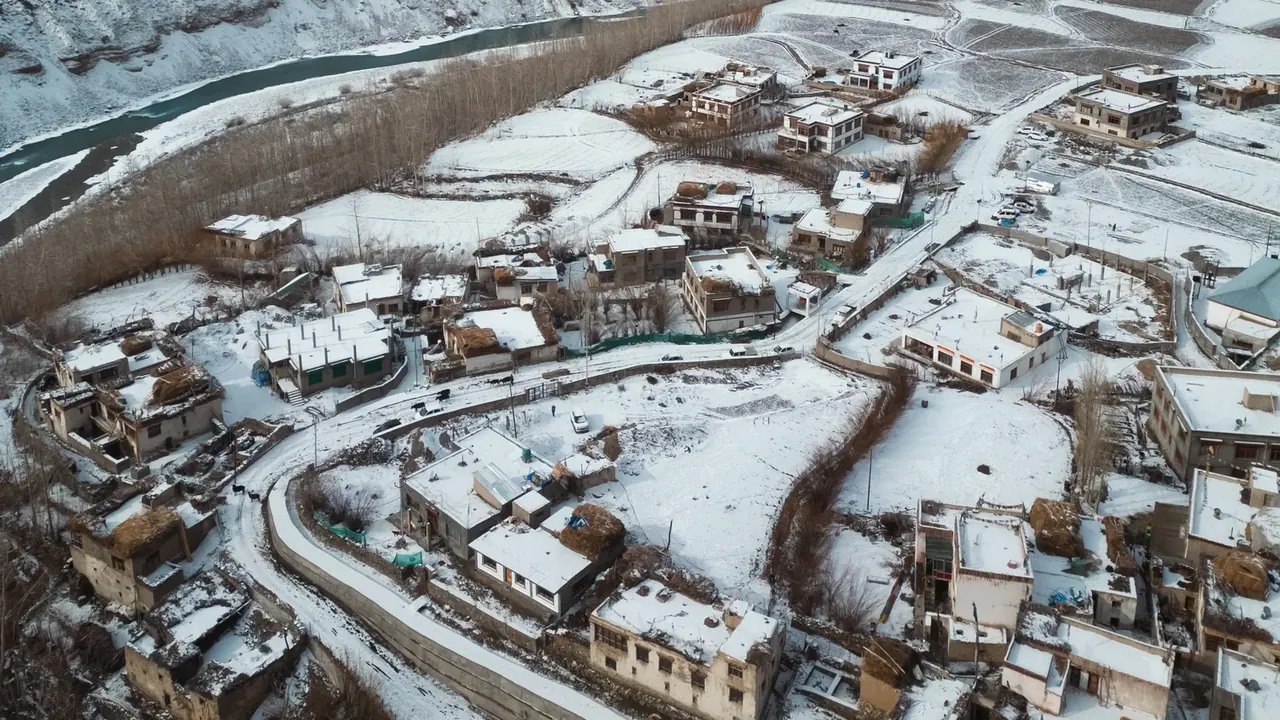
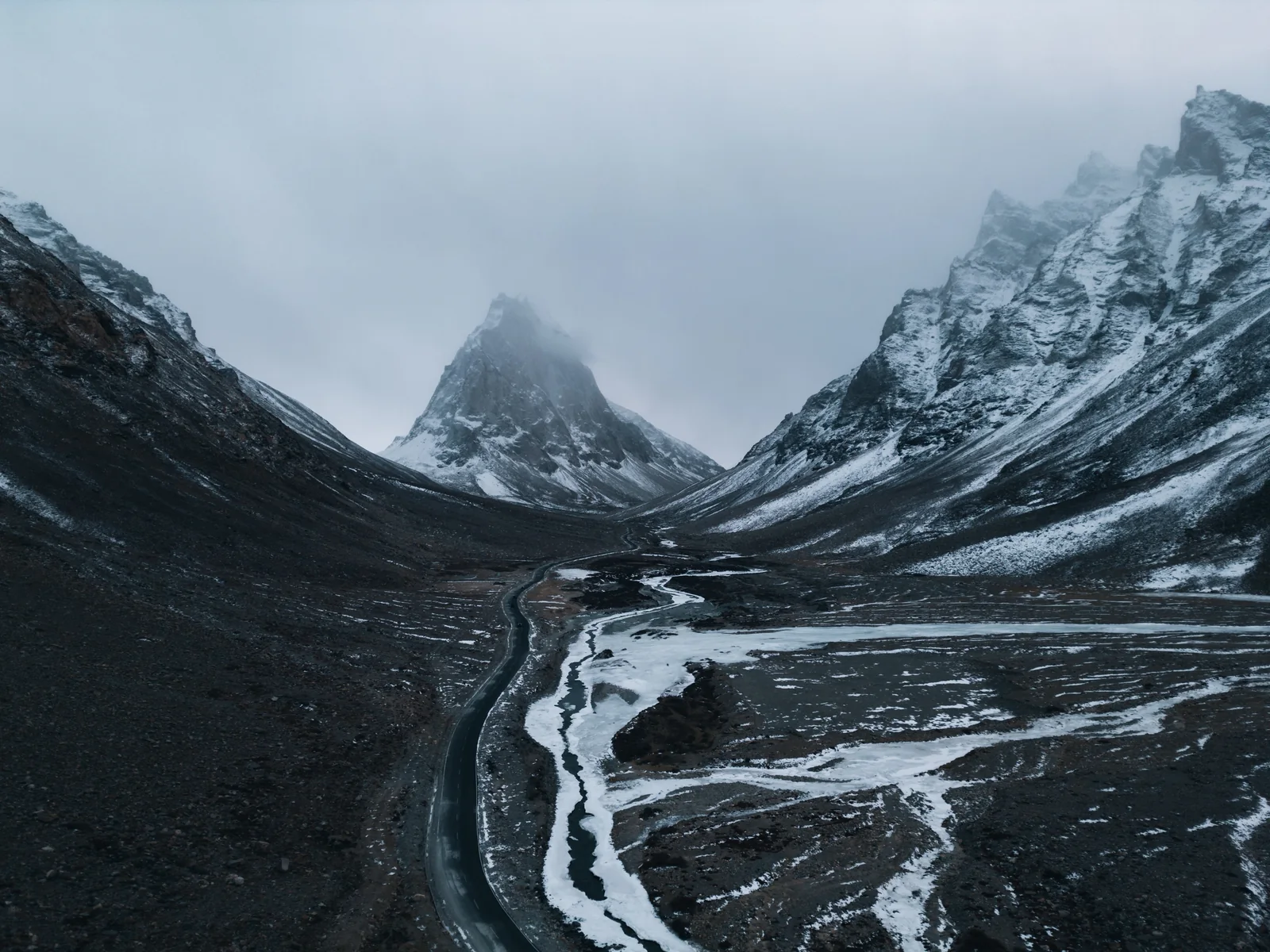
Arrive in winter and you meet a different valley. Snow lies across the fields around Padum, the Zanskar river runs with shelves of ice, and monasteries such as Karsha and Phuktal settle into a hush that summer visitors never hear. Village life gathers around the stove. Average temperatures stay below freezing from November to March, and deep-winter nights can fall to around −20°C or lower.
This guide is written to help you decide whether a winter road journey suits your dates and your idea of comfort. Our expedition begins in Manali and travels by SUV, with Delhi overnight Volvo journeys before and after the seven mountain days. If you are weighing a different approach through Leh or Kargil, ask for that route's own access checks and overnight plan.
Join the Winter Zanskar journey
- Winter Zanskar 2026–27 · 7 days, Delhi to Delhi: 4×4 SUV road journey with local winter stays. Departures Nov 2026–Mar 2027; from ₹32,000 + GST (early bird, limited seats). See dates & itinerary.
Best time to visit Zanskar in winter
| Travel window | What to plan around |
|---|---|
| November | The valley turns towards winter. Confirm road clearance and overnight facilities; snow cover depends on the season. |
| December | Colder days, shorter light and the butter-lamp glow of Galdan Namchot and Losar. Christmas and New Year dates need the same road and stay checks as any other departure. |
| January–February | Deep winter at its most dramatic. Plans stay flexible around clearance and available rooms; never assume every pass or walk is open. |
| March | Long light returns, but snow and road conditions still shape the journey. Spring on the calendar is not proof of safe access to every sector. |
Winter Zanskar temperature by month
| Month | Approximate average range around Padum |
|---|---|
| November | About −9°C to 0°C |
| December | About −12°C to −3°C |
| January | About −20°C to −10°C |
| February | About −20°C to −10°C |
| March | About −13°C to −3°C |
Choose your month by the route you can travel safely, not by the promise of snow. Ask when the final route decision is made and what happens if the intended approach cannot run.
How to reach Zanskar in winter from Manali
The road from Manali passes through the Atal Tunnel, Sissu, Keylong and Jispa, then climbs over Shinku La and past the lone spire of Gombo Rangjon to Padum. Our journey takes two driving days with a night in Keylong, and returns from Purne over Shinku La to Manali. Every remote sector needs its own clearance and local checks; the trip page has the day-by-day plan.
Delhi–Manali–Delhi overnight Volvo transfers sit on either side of the seven mountain days. Board the outward bus the evening before Day 1 and allow for the overnight return after the final Manali day. Leave a buffer before any flight or fixed connection.
Is Shinku La open in winter?
Shinku La (5,091 m) is the pass on the Nimmu–Padum–Darcha road where Lahaul in Himachal Pradesh meets Zanskar in Ladakh. In winter you can come in over Shinku La when the road is passable and permission from the higher authorities is in place. Heavy snow can close the pass for days or weeks at a time, and when it reopens the Border Roads Organisation and the police may limit movement, for example to 4×4 vehicles only. Our team confirms the road and the permission before departure; if the crossing is not allowed, we follow the backup plan agreed with you.
No calendar can tell you whether the pass will be open on your date. Confirm the latest road check, the intended crossing and the backup plan with the team close to departure; this article is planning guidance, not a live road-status bulletin.
Alternative approaches through Leh or Kargil
A different approach changes travel time, night halts, comfort and total cost, so it is never an automatic substitute for Manali. Ask for the revised itinerary and the cancellation or date-change terms in writing before you accept it.
What a winter Zanskar road journey feels like
Long, luminous driving days link small settlements, each stop shaped by the road and the daylight. Around Padum, unhurried village visits and time in the monasteries bring you close to the rhythm of valley life. Snow-covered slopes and near-empty roads give the journey its character; the weather decides which views and stops you reach.
From Padum, a day excursion towards Drang Drung Glacier, Pensi La and Rangdum is attempted only when the road and snow allow, returning to Padum the same evening. Purne is the base for an optional walk to Phuktal monastery. Neither is automatic; both depend on safe conditions on the day.
Zanskar at a glance
| Fact | Detail |
|---|---|
| Where | A high Himalayan valley in Ladakh, between the Great Himalaya and the Zanskar Range |
| Size and height | About 7,000 sq km, mostly between 3,600 m and 4,000 m |
| Main town | Padum, 3,669 m, headquarters of the new Zanskar district (notified on 27 April 2026, carved out of Kargil) |
| People | 13,793 residents in the 2011 census; most speak Zanskari, written in Tibetan script |
| Faith | Predominantly Tibetan Buddhist, with a Sunni Muslim community in Padum since the 19th century |
| Rivers | The Doda (Stod) and the Lungnak (Tsarap) meet near Padum to form the Zanskar River, which flows north-east to the Indus |
A short history of Zanskar
For centuries Zanskar was a largely independent Buddhist kingdom. Two related royal houses, founded around the 10th and 11th centuries, ruled from Padum and Zangla, and both places still carry the memory of palaces and kings. The great hillside and cliff monasteries of Karsha and Phugtal trace their beginnings to the same era, when teachers and translators carried Buddhism between India, Tibet and these high valleys.
In the early 17th century the Ladakhi king Sengge Namgyal brought Zanskar into the Kingdom of Ladakh. In 1822 raiders from Kullu, Lahaul and Kinnaur swept through the valley and destroyed the royal palace at Padum. A year later the Hungarian scholar Alexander Csoma de Kőrös arrived at Zangla Palace to study Tibetan; in 1826–27 he worked at Phugtal on the first Tibetan–English dictionary, and a stone tablet there still honours him.
After 1947 Zanskar and Ladakh became restricted areas, opening to foreign visitors only in 1974. A road from Kargil over Pensi La arrived in the late 20th century, and the Nimmu–Padum–Darcha road, completed by 2023, opened the Shinku La route from Lahaul. In 2026 Zanskar became a district in its own right, with Padum as its headquarters.
Life in Zanskar, and how it changes in winter
Zanskari villages are built around the little land that can be farmed. Barley, lentils and potatoes grow on irrigated terraces below about 4,000 m, fed by streams of snow and glacier melt. Families keep yaks, dzo (a yak–cow cross), sheep, goats and the sturdy Zanskari horse. In summer many herds move up to high pastures, known as doksa, often tended by the women of the village.
Most of the year's precipitation falls as snow, and winter is long. Life turns inward: the harvest and fodder are stored, the stove becomes the heart of the home, and the village and monastery calendars carry on through the cold months. Communities were historically largely self-sufficient, trading for tools, jewellery and religious objects. For generations, deep-winter travel meant walking the frozen Zanskar River, the route now known as the Chadar.
Polyandry, in which brothers shared one wife to keep family land together, was once common and survived in some villages into recent decades. The close bond between household, field, herd and local monastery is still easy to feel when you visit a village with a local host.
Festivals in Zanskar: winter and summer
Zanskar keeps the Tibetan lunar calendar, so festival dates move every year. Two of the most atmospheric celebrations fall in December, inside the winter travel window; the famous masked-dance festivals of the monasteries belong to summer.
| Festival | When and what happens |
|---|---|
| Galdan Namchot (winter) | 25th day of the 10th Tibetan month, always in December. Monasteries and homes glow with butter lamps to mark the birth and passing of Je Tsongkhapa, opening the Ladakhi new-year season. |
| Losar, Ladakhi New Year (winter) | Celebrated in December around the winter solstice, with family gatherings, prayers and visits to relatives. |
| Karsha Gustor (summer) | Two days of masked cham dances, music and chanting at Karsha Monastery; it is listed for July. |
| Sani Nasjal (summer) | Usually in the first week of August. Lamas from Bardan perform masked dances, and the statue of Naropa at Sani is unveiled. |
| Zanskar Festival (autumn) | A Tourism Department festival at Padum with folk dance, music, archery and polo; the 2023 edition began on 13 October. |
Places in Zanskar and the stories behind them
These are the places you pass, or can reach, on a road journey from Manali. In winter not every monastery or side valley is accessible; the team decides each visit on the day, guided by snow, daylight and safety.
Gombo Rangjon, the god's mountain
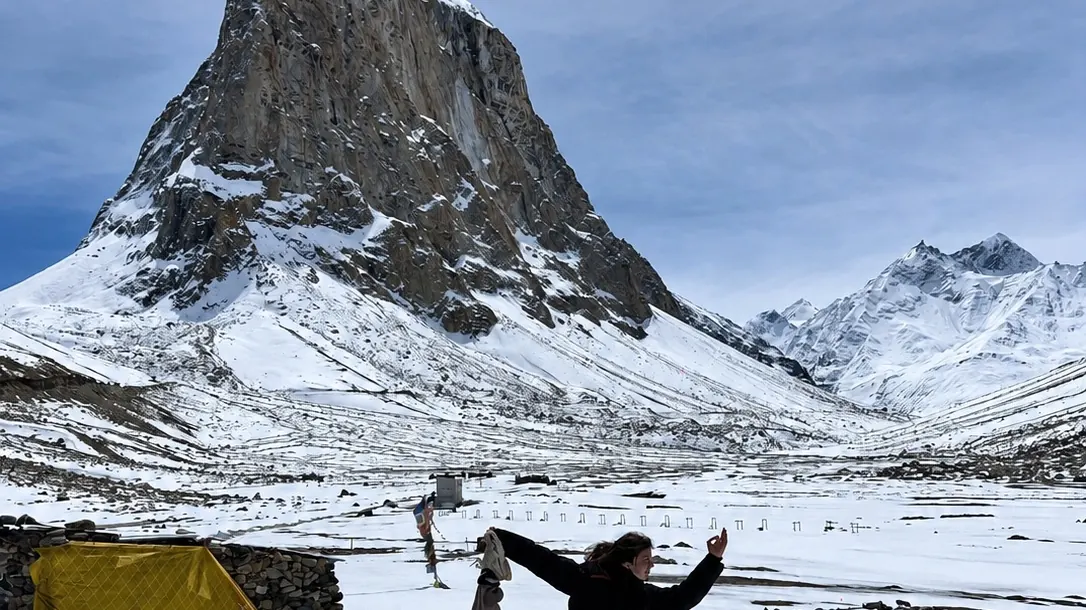
Soon after Shinku La, a lone rock pyramid of about 5,520 m rises beside the road towards Kargyak. Locals call it the god's mountain and believe it is the home of Gonbo, a form of the protector deity Mahakala. Few sights on the drive into Zanskar are as arresting.
Purne and Phugtal Monastery
Purne sits where the Kargyak and Tsarap rivers meet to form the Lungnak. From here a two-to-three-hour walk along the Tsarap valley, via Cha, leads to Phugtal (also spelled Phuktal), about 52 km south-east of Padum. The monastery clings to the cliff like a honeycomb around a natural cave that tradition links with Padmasambhava, Marpa and the translator Phagpa Sherab. The present monastery was founded in the early 15th century by Jangsem Sherap Zangpo, a disciple of Je Tsongkhapa, and some 70 monks live here. In winter the walk is attempted only when the trail is safe.
Bardan Monastery
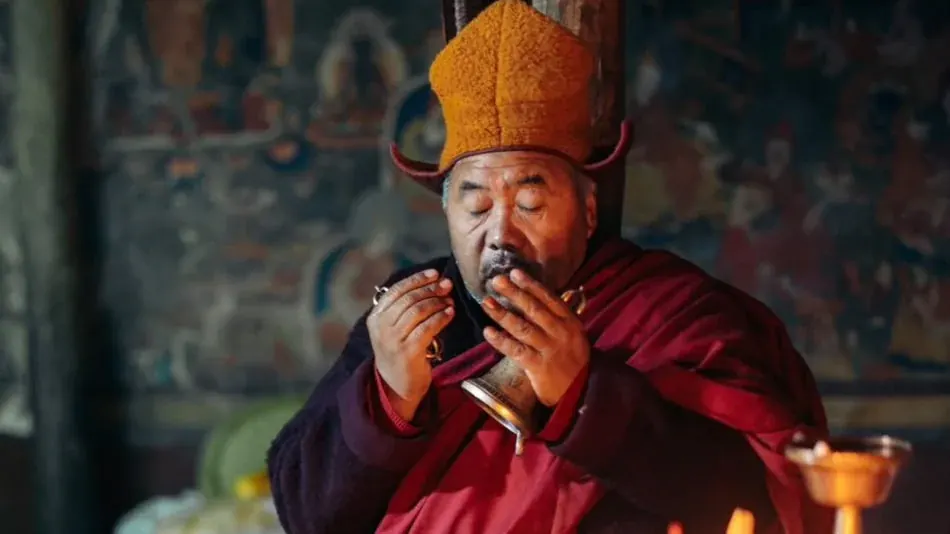
In the Lungnak valley, about 12 km from Padum, Bardan was founded in the early 17th century and belongs to the Drukpa school. Its lamas perform the masked dances at Sani Nasjal each summer.
Padum
Named after Padmasambhava, Padum was one of the two capitals of the old Zanskar kingdom. Today it is the valley's market town and district headquarters, where Buddhist and Muslim families have lived side by side for generations, and the natural base for monastery visits across central Zanskar.
Karsha Monastery
Across the valley from Padum, Karsha's whitewashed buildings climb a steep mountainside. It is the largest monastery in Zanskar and belongs to the Gelug (Yellow Hat) school, with roughly 100 to 150 monks. Its foundation is attributed to the translator Phagspa Shesrab, and its oldest temple, dedicated to Avalokiteshvara, holds wall paintings linked to the era of the great translator Rinchen Zangpo (958–1055). The Karsha Gustor festival is held here.
Sani Monastery
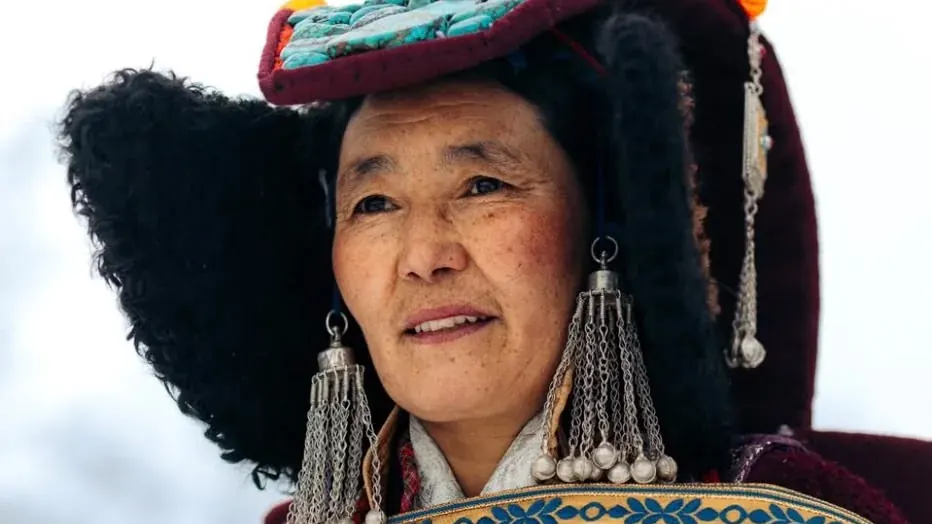
About 6 km north-west of Padum, Sani is thought to be the oldest religious site in Ladakh and Zanskar. Its Kanika chorten is traditionally linked to the Kushan emperor Kanishka, and the Indian yogi Naropa is believed to have meditated here. Unusually, Sani stands on level ground rather than a hilltop, and it is the only Drukpa monastery in Zanskar with nuns.
Stongde Monastery
About 18 km from Padum, on a hillock above the valley, Stongde is associated with the Tibetan yogi and translator Marpa and belongs to the Gelug school.
Zangla
Zangla was the seat of Zanskar's second royal house. Its palace is where Csoma de Kőrös lived in 1823 while studying Tibetan. Today the village has a nunnery, and the small Tsazar monastery, about 6 km to the south, is known for its wall paintings.
Dzongkhul Monastery
In a side valley of the Stod near Ating, Dzongkhul is a meditation retreat associated with Naropa and belongs to the Drukpa school. Reaching it in winter depends entirely on snow on the Stod road.
Pensi La and Drang Drung Glacier
Pensi La, at roughly 4,400 m, is the highest point on the Kargil–Zanskar road and the watershed where the Doda river begins. Just below it, the long tongue of the Drang Drung glacier spills towards the valley. From Padum this is a full-day excursion attempted only when the road and snow allow, returning to Padum the same evening.
Winter weather and what to pack
Prepare for freezing days, colder nights and wind, including time spent outside the vehicle. Conditions vary with altitude, month and weather; check the forecast for your actual overnight stops close to departure rather than relying on one temperature for the whole valley.
- Layer up: thermals, an insulated jacket and a windproof outer shell.
- Warm gloves, a hat, wool socks and footwear with good grip; ask the team about any planned walk.
- Sunglasses, sunscreen and a refillable water bottle; keep drinking water to hand on driving days.
- Keep essentials, chargers and a spare warm layer within reach rather than buried in the main bag.
Winter stays: heating, bathrooms and hot water
The published trip uses local homestays or partner guesthouses in Manali, Keylong, Padum and Purne; backup stays, for example at Sissu, may be used if roads close. In extreme cold, Zanskar stays run common-area bukhari heating until 11 PM, and bedroom heating needs specific confirmation. Confirm your allocated room, heating arrangements and operating hours before paying.
Ask whether the bathroom is attached or shared and how the property supplies hot water when pipes freeze. Electricity, charging and extra blankets matter too. A property photograph does not confirm the facilities of your assigned room.
Budget, inclusions and departure dates
The published Winter Zanskar journey covers seven mountain days, six accommodation nights and Delhi–Manali–Delhi overnight Volvo transfers. Prices depend on the selected batch and any active offer. Read the current total, GST, room-sharing basis, meals and exclusions on the trip page before paying; special dates can carry different fares.
View Winter Zanskar tour prices, itinerary and planned departures. For other routes, compare our winter Himalayan journeys.
Winter Zanskar road expedition versus Chadar Trek
Our Manali-start journey is an SUV road expedition and does not include trekking on the frozen Zanskar River. Chadar is a separate trekking itinerary with its own conditions and arrangements. The optional Phuktal walk is an out-and-back monastery visit, attempted only when the trip lead confirms a safe trail and enough daylight.
Before you book: route changes and altitude planning
- Confirm the route decision date and how the team communicates changes.
- Ask what happens to your booking if the intended pass or a major sector closes.
- Check vehicle sharing, luggage space and the facilities at each overnight stay.
- Read the price, cancellation and date-change implications of any replacement itinerary.
If you fly into Leh for a separate approach, Ladakh Tourism advises at least 48 hours of rest before higher-altitude travel. The Manali itinerary needs its own altitude plan; arriving by road does not remove altitude risk. Discuss individual concerns with a qualified clinician and follow the trip lead's instructions if the plan needs to change.
Planning reference: Ladakh Tourism travel advisory. For the main road-travel season, read our best time to visit Zanskar guide.
Sources for history, places and festivals: Ladakh administration: Zanskar, Leh district festivals, Utsav: Sani Nasjal, and the Wikipedia articles on Zanskar, Shinku La, Phugtal, Karsha, Sani and Galdan Namchot.
Choose your Zanskar journey
- Winter Zanskar SUV Expedition: Manali-start winter dates, subject to local route confirmation.
- Zanskar Overland Journey: Compare an overland journey in the main road-travel season.
Travel questions
Can you visit Zanskar in December?
A visit may be possible when the local team confirms safe access, available stays and permissions. December dates remain subject to road conditions; a listed departure does not guarantee the intended pass crossing.
What is the temperature in Zanskar in winter?
Around Padum, average temperatures run roughly −9°C to 0°C in November and fall to about −20°C to −10°C in January and February. Nights, passes and cold spells can be colder, so pack for well below these averages.
Is Shinku La open in winter?
You can cross Shinku La in winter when the road is passable and permission from the higher authorities is in place. Snow can block the pass for days or weeks, and the BRO or police may restrict movement, so the team confirms the road and permission before departure and follows the agreed backup plan if the crossing is not allowed.
How do you reach Zanskar in winter?
Our intended approach starts in Manali and travels through Sissu, Jispa and Shinku La towards Padum, subject to safe access. Leh or Kargil approaches require their own confirmed route and overnight arrangements.
How many days do you need for the Winter Zanskar trip?
The published itinerary has seven mountain days and six accommodation nights. Delhi–Manali–Delhi overnight Volvo travel sits before and after those days, so allow additional time for those connections and a return buffer.
Is a Winter Zanskar road trip the same as Chadar Trek?
No. This journey uses SUV road transport and does not include the frozen-river trek. The optional Phuktal monastery walk is a separate detour, subject to safe trail conditions.
Are heated rooms and hot water guaranteed at every stay?
Facilities vary by property and allocated room. Confirm bedroom heating, operating hours, attached or shared bathrooms and winter hot-water arrangements in your written proposal before booking.