Best Time to Visit Ladakh
The best time to visit Ladakh depends on the kind of journey you want: open-road freedom, festival energy, mirror-still lakes, or a slower, more luxurious mountain rhythm.
By Himalayan Locals Editorial Team
If you are searching for the best time to visit Ladakh, the right answer is not a single month. Ladakh changes character dramatically between late spring and early autumn. Roads open, high passes clear, lakes turn metallic blue, and villages move from survival mode into their working season. What matters is whether you want your first Ladakh journey to feel easy, whether you want to cover a long circuit, or whether you want a more remote, quieter version of the region.
Most travellers imagine Ladakh as one destination with one weather pattern. In reality, it behaves more like a sequence of moods. Early season travel can feel crisp, spacious, and photogenic, with fewer vehicles on the road and more snow still hanging on the ridgelines. Peak summer gives you the broadest route access and the best chance of linking Nubra, Pangong, Tso Moriri, Zanskar, and higher passes in one confident sweep. Shoulder periods bring a calmer, more editorial feel, especially if you care more about texture, culture, and pacing than box-ticking.
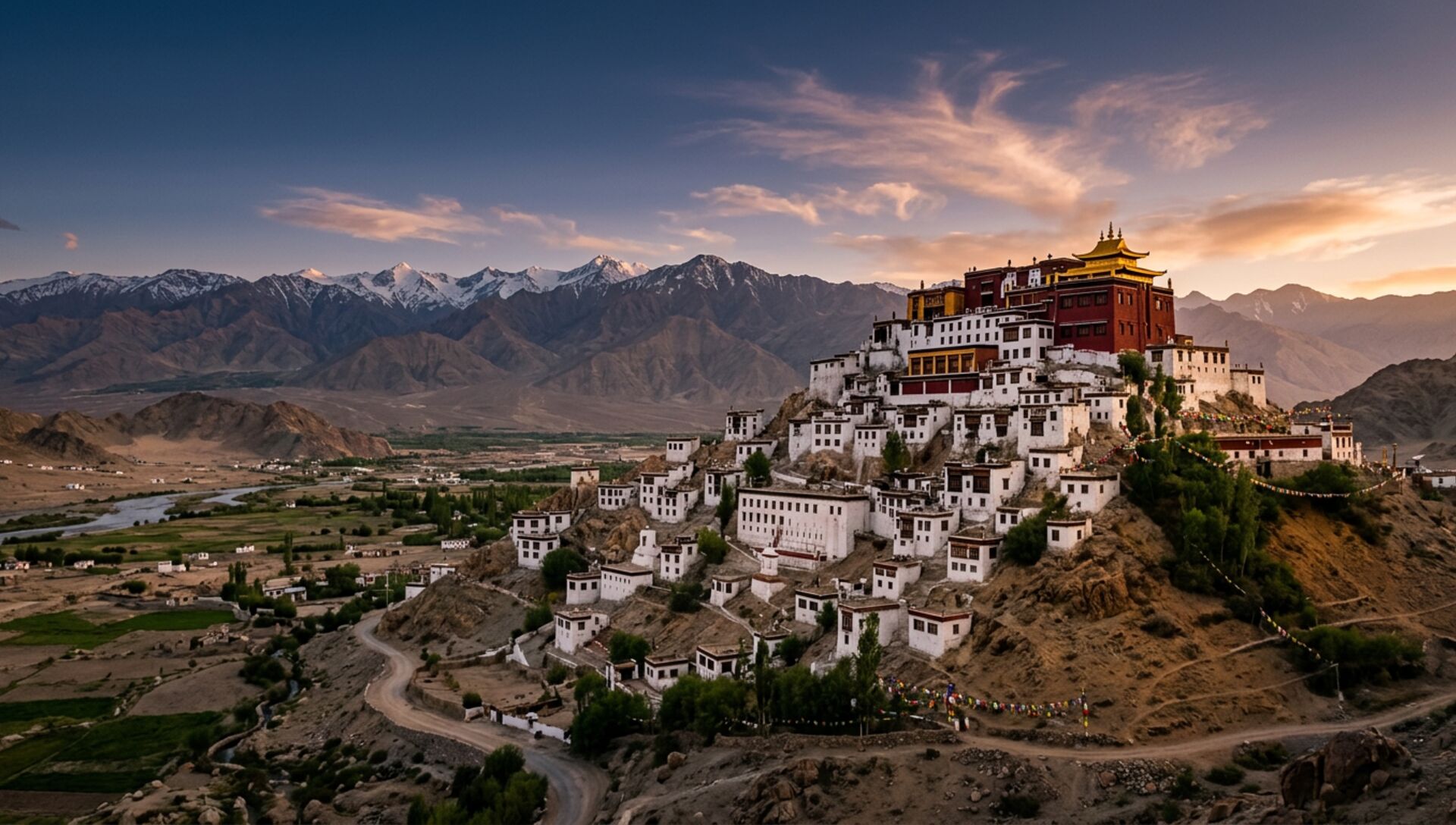
May to September is the main Ladakh season
For most people, the best time to visit Ladakh is between May and September. That is when the region is most accessible, internal roads are generally functioning, and first-time travellers can experience both the dramatic landscape and the cultural side of the trip without battling winter constraints. If you are building your first Ladakh plan and want the safest all-round recommendation, June through September is usually the sweet spot.
Within that wider window, each month offers a different strength. May and early June feel quieter and more dramatic because traces of winter are still visible. July and August are the easiest months for broad, road-based itineraries and family travel. September is often the month people remember most fondly because the light sharpens, skies deepen, and the roads still remain practical for long circuits. That is why premium travellers often lean toward June or September rather than the absolute middle of summer.
How the season changes across the summer
May and early June
This is an excellent time if you want Ladakh to feel raw, cinematic, and less crowded. Snow often remains visible on the high mountains, the air feels cleaner, and many views have a stronger contrast between rock, ice, and open sky. For photographers and couples who want a more atmospheric trip, this can be one of the most beautiful moments in the year. The trade-off is that some route conditions can still be more variable than later in the season, especially on ambitious circuits.
Late June to August
This is the broadest operating season for classic Ladakh road trips. Most travellers who want a dependable Nubra, Pangong, Leh, monastery, and high-pass combination will do well here. Hotels, camps, local drivers, and support crews are all fully active. If you are travelling with older parents, a mixed-age group, or friends who want confidence over unpredictability, this is often the easiest planning window. It is also the phase when fixed departures and multi-stop expeditions are simplest to run well.
September
September is often underrated by casual travellers and highly valued by experienced operators. The monsoon influence outside Ladakh begins to soften, traffic can feel less intense than peak summer, and the visual tone becomes cleaner and more elegant. Landscapes read better, lake surfaces often look more dramatic, and the whole region feels slightly less hurried. For a premium traveller who wants access plus atmosphere, September is one of the strongest times to visit Ladakh.
Journeys that work especially well in Ladakh season
- Classic Ladakh Circuit: A strong first Ladakh journey with balanced pacing, classic landscapes, and reliable summer routing.
- Umling La Ladakh Expedition: Best for travellers who want a more ambitious high-altitude road experience in the core operating season.
- Ladakh Grand Circuit Odyssey: Ideal when roads are open and you want a longer route with wider Himalayan coverage.
The best month depends on what you want Ladakh to feel like
If this is your first high-altitude trip and you want a smooth, confidence-building experience, lean toward July, August, or early September. If you care about visual drama and thinner crowds, May, June, and September tend to feel more rewarding. If you want a road-heavy expedition with multiple remote sectors, choose the phase when routes are most reliably open and local operations are fully active. The best time to visit Ladakh is always the period that fits your route ambition, not just the prettiest image on social media.
It is also worth thinking beyond weather. The best Ladakh trips are shaped around acclimatisation, travel pace, and support quality. A good operator will slow the opening days, build the route intelligently, and leave room for road realities instead of pretending the Himalayas work like a city holiday. Timing helps, but routing helps more. If you only look at temperature charts and ignore journey design, you can still land in Ladakh at the right month and have the wrong trip.
Mistakes people make when planning Ladakh by season alone
- Choosing the cheapest month without asking whether the route they want is actually enjoyable at that time.
- Trying to cover too many lakes and valleys too quickly just because the roads are technically open.
- Ignoring acclimatisation and fitness while focusing only on road status or photography conditions.
- Assuming every week in summer is identical, when light, crowds, and pacing vary a lot.
The best time to visit Ladakh is rarely about chasing a perfect forecast. It is about choosing the season that supports your version of the trip. Some travellers want a cultural road journey with comfort and excellent stays. Others want a rugged, high-pass expedition that feels more remote. Others simply want to see the monasteries, valleys, and lakes without rushing. Once you know that, choosing the right month becomes much easier.
Why shoulder-season planning often feels better
Travellers looking for a quieter, more refined Ladakh experience often do not need the absolute busiest weeks of summer. A luxury route benefits from cleaner timing because the road feels calmer, the stay experience feels less crowded, and the whole journey gains more emotional space. June and September often work especially well for this reason. You still get access, but you are less likely to feel you are moving inside the densest part of the season.
That does not mean shoulder timing is automatically superior. It means it becomes superior when it matches the traveller’s priorities. If your goal is wide route certainty for a family or large group, the peak operating window may still be the smartest choice. If your goal is fewer interruptions, more atmosphere, and a more private-feeling road journey, shoulder timing can be a strong upgrade.
Which months suit which kind of Ladakh traveller
- Choose June or September if you want a more private-feeling premium road journey with cleaner light and less crowd pressure.
- Choose July or August if you want the widest route certainty for Nubra, Pangong, Tso Moriri, monasteries, and family-friendly pacing.
- Choose May or early June if you care more about atmosphere, snow contrast, and fewer vehicles than about maximum route width.
- Push into more remote eastern sectors only after acclimatisation and only in the stronger access phase of the season.
What Ladakh weather really changes on the ground
In Ladakh, weather changes more than temperature. It changes road confidence, lake experience, dust, visual tone, and how exhausting each drive feels. A route that sounds glamorous in a brochure can feel punishing if the month and the pacing are wrong. That is why mountain-grade planning matters more than a simple average-temperature search.
Permits and protected sectors
Permits do not usually decide which month is best, but they do shape how smooth the route feels. Nubra, Pangong, Tso Moriri, Hanle, and some Changthang-linked sectors often involve permit planning, especially when travellers are combining multiple high-altitude stops inside one journey.
What kind of route support improves Ladakh in each season
Summer Ladakh works best with fewer but stronger overnights, a vehicle suited to mountain surfaces, and enough flexibility to soften a day if the road runs slower than expected. The more remote the season or sector, the more valuable local support becomes. On high-altitude roads, calm execution feels more premium than aggressive route promises.
AMS and altitude safety
- Land in Leh and keep the first one to two days light.
- Avoid hard driving or major lake sectors immediately after arrival.
- Watch for headache, nausea, unusual fatigue, dizziness, or breathlessness.
- Use a route plan that allows the body to adapt before the big scenery days arrive.
How to think about a 7 to 10 day Ladakh plan by season
| Trip length | Best seasonal use |
|---|---|
| 7 days | Best in peak access months when you want Leh, Nubra, and Pangong without overstretching. |
| 8 to 9 days | Strong in June to September if you want cleaner pacing and room for one deeper cultural layer. |
| 10 days | Best when adding a remote sector, more premium spacing, or a less rushed return arc. |
Travel questions
Which month is best for Ladakh?
For most travellers, June through September is the strongest all-round answer. September is especially appealing if you want access plus a calmer, more premium feel.
Do I need permits for a Ladakh road trip?
Domestic tourist permit requirements were removed under Ladakh notification S.O. 30 of 6 August 2021, with security restrictions retained in some border pockets. Indian travellers should check current fee/registration requirements and carry ID. Foreign travellers need route- and nationality-specific Protected Area Permit approval where applicable.
What vehicle is best for Ladakh?
A well-maintained SUV with an experienced mountain driver is the safest and most comfortable choice for most travellers. Motorcycles work well only when the rider already understands long Himalayan road days and altitude fatigue.
How serious is altitude sickness in Ladakh?
Altitude illness can affect anyone. Ladakh Tourism advises at least 48 hours of complete rest in Leh before higher-altitude travel. Do not ascend with symptoms; seek medical assessment. Breathlessness at rest, confusion or difficulty walking require urgent help and descent.
Is September better than August for Ladakh?
For many travellers, yes. September often gives cleaner light, slightly calmer traffic, and a more elegant road rhythm while keeping the main circuits practical.
Can I visit Ladakh in May?
Yes, especially if you want a quieter mood and lingering snow on the high ridges, but route conditions can still be more variable than later in summer.