 Himalayan Locals
Spiti Valley in Winter: December, January & February Guide
Is Spiti open in winter, how cold does it get and when does it snow? Roads, temperatures and what to expect from December to February.
By Himalayan Locals Editorial Team
Travelling specifically in December? Read our Spiti in December guide: snowfall, road access, route and packages.
Winter turns Spiti into one of the quietest places in India. The summer crowds are gone, the villages settle into their cold-season rhythm and, after a fresh fall, the valley is white from river to ridge. It is also a serious journey: very cold nights, one road in and out, and conditions that change with every storm. Here is what to expect, month by month.
Is Spiti open in winter?
Yes, but only from one side. The Manali–Kaza road over Kunzum Pass, at about 4,551 m, closes for the winter months, and so does the route to Chandratal. The eastern road from Shimla through Kinnaur, by way of Sangla or Kalpa, Nako and Tabo to Kaza, is kept open through the year. After heavy snowfall or a landslide, stretches of it can close for a few days until they are cleared.
That shapes every winter itinerary: you enter and leave through Kinnaur, and you keep a buffer day in case the road needs clearing. A local driver who checks conditions each morning matters more in winter than any single sight.
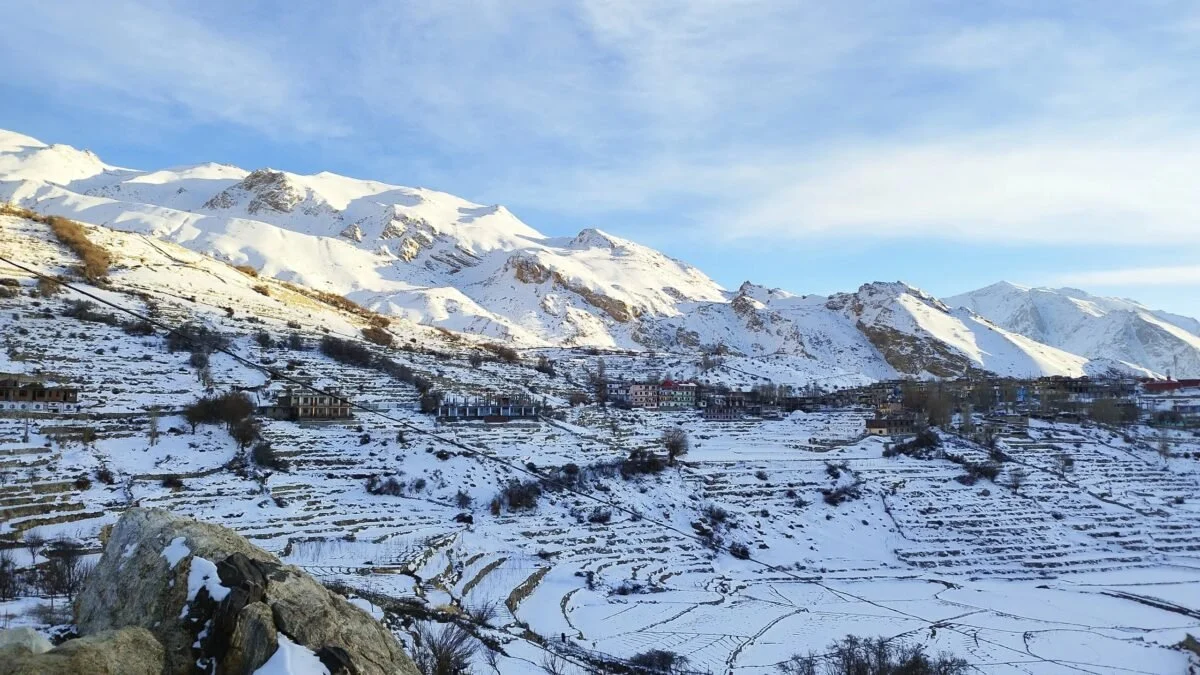
Winter Spiti Valley weather and temperature: plan for each overnight stop
Spiti Valley weather in winter is not uniform: Kaza, Tabo, Sangla and Kalpa differ in altitude, exposure and road conditions. Check the temperature forecast for each overnight stop on your actual travel dates; one valley-wide reading can hide large differences. Expect freezing nights, prepare for ice and wind, and check local road updates before every mountain driving day.
This month-by-month guide helps choose a winter travel window. For December-specific snowfall, roads and practical packing, use our dedicated December article rather than treating general winter conditions as a guarantee for one date.
Spiti temperature today and seasonal planning answer different questions
A current forecast helps with the next road day; a seasonal guide helps you decide when to travel. This page does not display live Spiti temperature or weather readings. Before departure, check the forecast’s place name, elevation and update time, then ask the local team about the actual road sector. A clear forecast for Kaza does not confirm safe access to every higher village.
For a specific month, use the December weather and road guide. For facilities after a cold day, read what to confirm about heated stays.
Spiti from October to March
| Month | What to expect |
|---|---|
| October | The end of autumn. Clear, crisp days; the Manali side usually still open early in the month. |
| November | Cold, dry and very clear. The Manali road is usually closed by now, so Spiti is reached through Kinnaur. Snow is possible but usually light. |
| December | Deep cold arrives, and in many years the first heavy snowfall. Short days and frozen water. |
| January | Usually the coldest month and the most likely to bring snow to the valley floor. |
| February | Still fully wintry, with brighter, slightly longer days towards the end of the month. |
| March | Winter begins to ease, though snow and cold nights continue at height. |
Spiti in December: snowfall, road access and realistic expectations
A Spiti Valley December trip is possible when the Shimla–Kinnaur approach is passable, but it is not a guaranteed snow holiday. December brings shorter daylight hours, sub-zero nights and the possibility of fresh snowfall; the exact timing and depth vary each year. The Manali–Kunzum route is not a dependable winter entry. Check current road advisories with your operator and allow flexibility for temporary closures.
For a December Winter Spiti expedition, a practical route is Shimla–Sangla–Tabo–Kaza–Kalpa, with Chitkul and the higher villages only when local conditions permit. Ask for the heating arrangements at each overnight stay, the vehicle plan, meal coverage and what happens if snow delays the return. If you want a small-group SUV journey, compare the Explorer itinerary; if you prefer a private upgraded stay and service plan, compare Premium and Luxury before choosing.
Planning Spiti in December? See the 7N/8D Winter Spiti Explorer expedition from Delhi, or compare Winter Spiti packages and prices. Departure dates and road access require confirmation.
How cold is Spiti in winter?
Kaza sits at about 3,650 m. In mid-winter, night temperatures there regularly fall to around −20 °C, and lower during cold waves; January is usually the coldest month. Sunny days can feel surprisingly mild, but water pipes freeze, and many hotels, homestays and cafés close for the season.
In practice, that makes your room the most important booking of the trip. Ask for heating that is confirmed in writing, check that each property is actually operating on your dates, and expect simpler bathrooms than in summer. On our Winter Spiti journeys, room heating is included on every night.
When does it snow in Spiti?
Snowfall is most likely from late December to February, often in short spells followed by clear, intensely blue days. It is never guaranteed on a given date: some weeks bring a deep fall, others none at all. If seeing snow is your priority, choose January or February and keep your dates flexible.
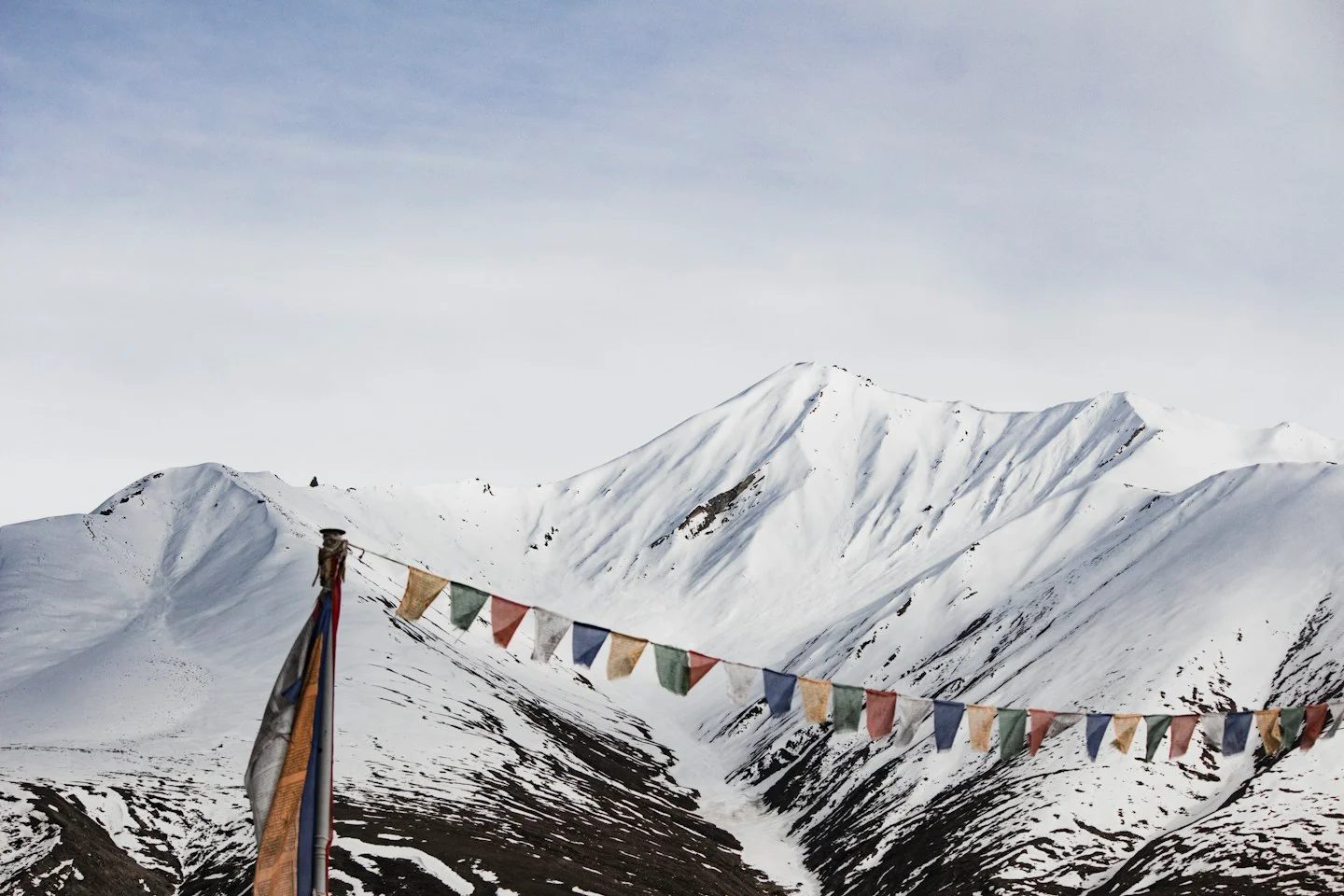
A typical Winter Spiti route
- Shimla, to rest after the journey from Delhi or Chandigarh.
- Sangla and the Baspa Valley, with Chitkul when safely accessible.
- Into Spiti through Nako and Tabo, with its ancient monastery.
- Kaza as a base for Key Monastery and the high villages, such as Langza, Hikkim and Komic, as conditions allow.
- Back through Kinnaur to Kalpa, facing the Kinner Kailash range, and on to Shimla.
What to pack for Spiti in winter
- Thermal base layers, a fleece and a warm down jacket.
- Insulated, waterproof boots with good grip on ice.
- A warm hat, gloves, a neck gaiter and woollen socks.
- Sunglasses and high-factor sunscreen: sunlight on snow is intense at altitude.
- Lip balm and moisturiser for the very dry air.
- Cash, as mobile networks and card payments can be patchy in winter.
- Any personal medicines, and advice from your doctor about travelling at altitude.
Ready to plan? Compare our Winter Spiti tour packages, prices and route, or read what to confirm about heated stays.
Plan your private Winter Spiti journey
- Winter Spiti Valley · Premium & Luxury · 7 nights: Private journey via Shimla, Sangla, Tabo, Kaza and Kalpa with heated stays. Premium from ₹65,000 pp and Luxury from ₹1,09,000 pp for four guests, plus 5% GST.
- Winter Spiti Explorer · 7 nights: Heated local stays, breakfast and dinner, and overnight Volvo from and to Delhi. From ₹37,500 pp for six guests, plus 5% GST.
Travel questions
Is Spiti open in December and January?
Yes, by the Shimla–Kinnaur road, which is kept open through the winter apart from short closures after heavy snowfall or landslides. The Manali–Kaza road over Kunzum Pass is closed.
Is there snowfall in Spiti in December?
Often, but not always. Snow is most likely from late December to February, and never guaranteed on a particular date.
How cold is Spiti in January?
January is usually the coldest month. Night temperatures in Kaza regularly fall to around −20 °C, and lower during cold waves.
Can we go to Spiti from Manali in winter?
No. The Manali–Kaza road and Kunzum Pass are closed in winter. Travel through Shimla and Kinnaur instead.
What is the best month to see snow in Spiti?
January and February give the best chance of snow, but keep your dates flexible, as snowfall varies from year to year.