Where to Stay on the Triund Trek: Tent or a Heated Cottage
Most Triund nights are spent in a shared tent on the ridge. What that night really involves, what a heated cottage changes, and how to decide which one suits you.
By Himalayan Locals Editorial Team
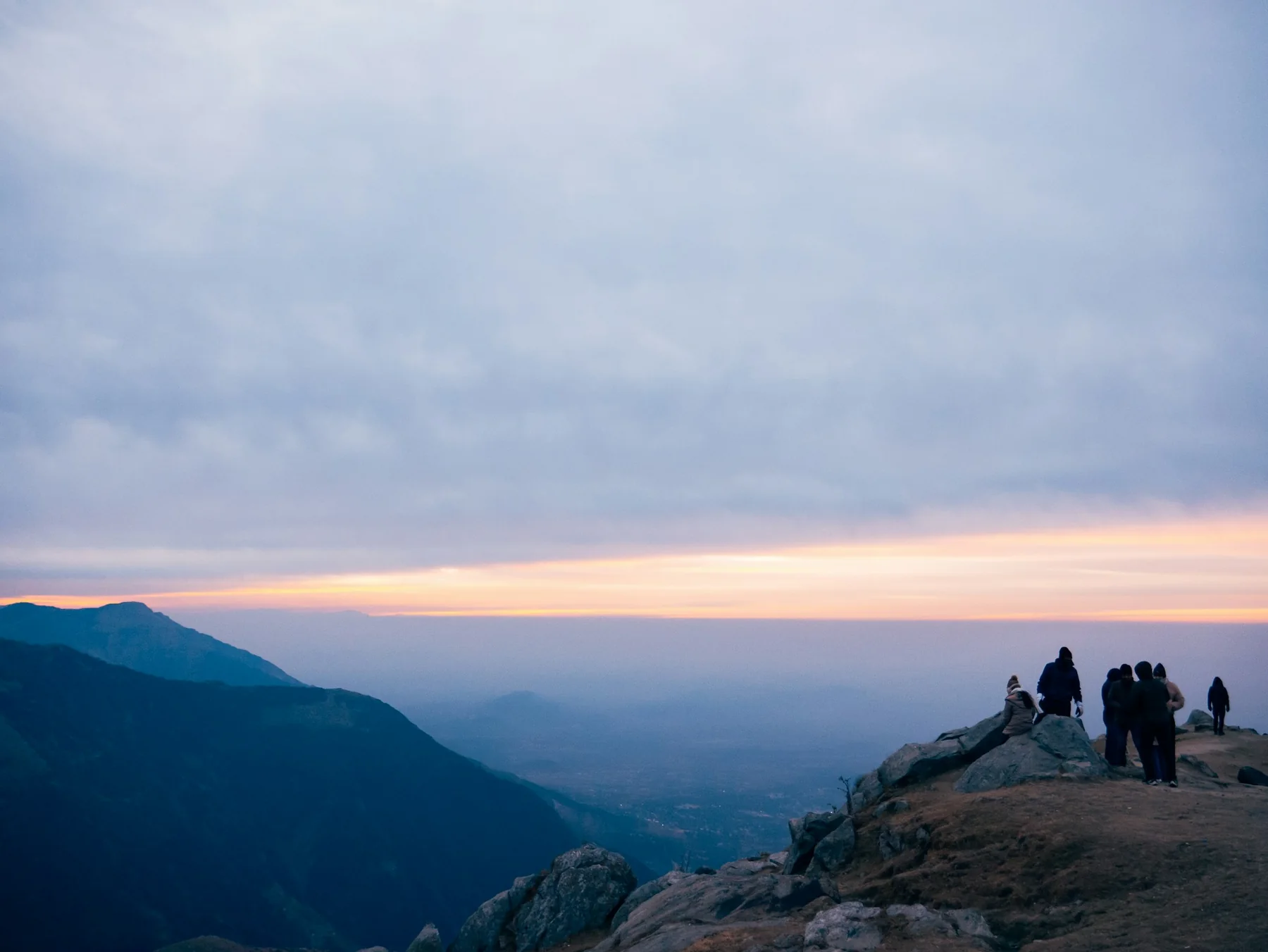
Ask anyone in McLeod Ganj about Triund and they will tell you about the ridge: the Dhauladhar wall in front, the Kangra Valley falling away behind, the light at sunset. Ask them about the night and the stories change. Cold feet in a sleeping bag. A queue for a toilet. A wind that finds every gap in the tent. The walk is short; the night is what decides whether you loved it.
What a Triund tent night actually looks like
Most packages sold in McLeod Ganj and Bhagsu follow the same pattern. A group of strangers meets in the morning, walks up together and sleeps in dome or alpine tents pitched on or near the ridge. Dinner is simple, cooked for the whole camp, and breakfast is early so the group can head down. Some camps have a generator for a few hours; many have none. Washing water is scarce, and toilets are basic structures shared by everyone on the ridge.
The Forest Department manages the trail and limits how many people may stay overnight at the top, which keeps the ridge from being overrun but also means campsites are tightly packed in season. On a busy weekend you share the ridge with music, torches and other groups late into the night.
None of this is a complaint about camping. For a group of friends who want a cheap, social night under the stars, it is exactly right. The trouble starts when the night is not what people expected: a couple who imagined something quiet, a first-timer who has never slept on the ground, or anyone arriving in the colder months, when the ridge can drop well below freezing after dark.
What changes when you sleep in a heated cottage
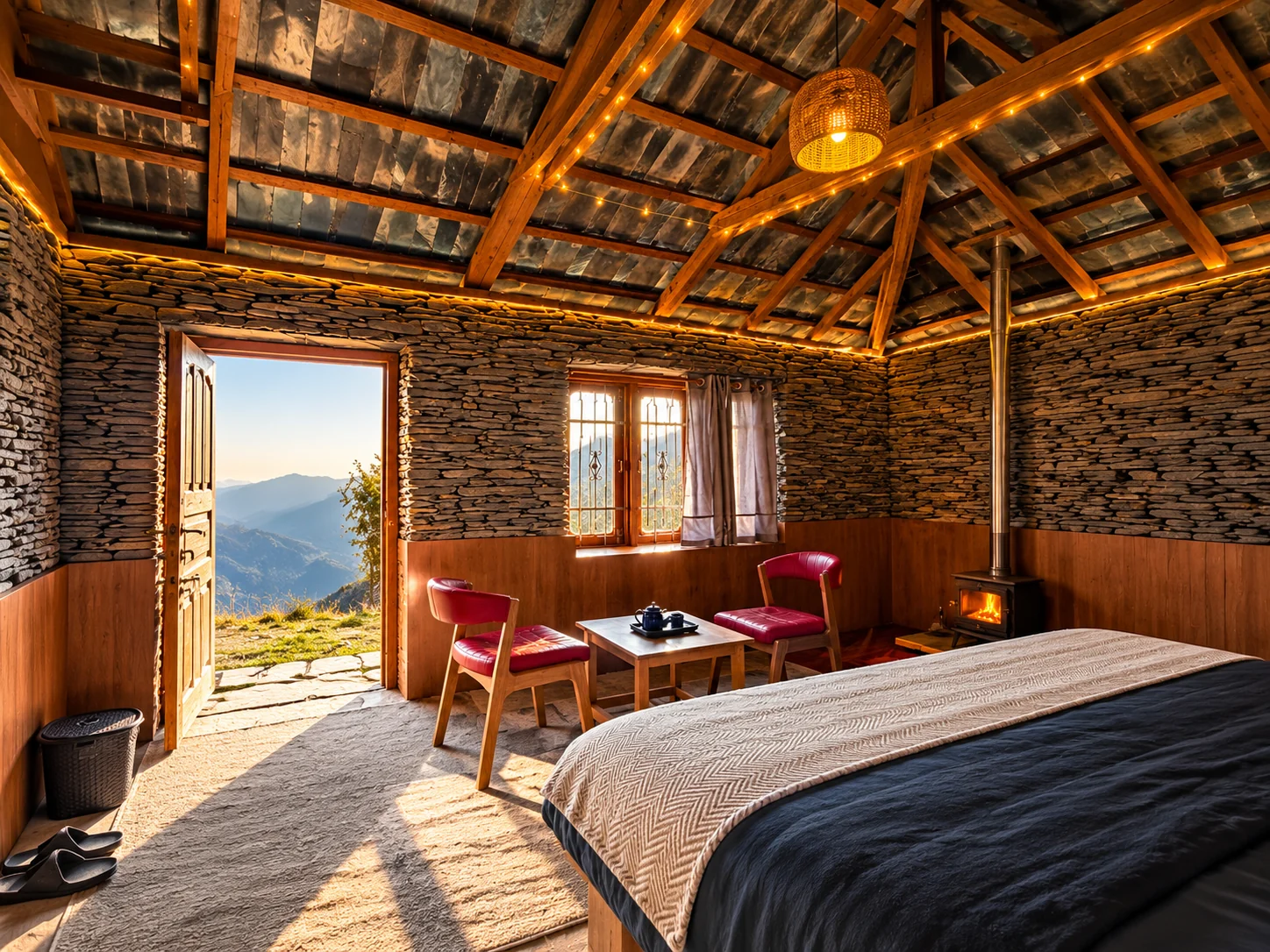
Our mountain cottage sits on the Bhagsu side of the mountain, 2.5 km below the Triund summit, at roughly 2,300 m. It has two rooms. Each is warmed by a traditional bukhari, the cast-iron wood stove that Himachali homes have relied on for generations. Once it is lit, the room holds its warmth through the evening, and you sleep in a proper bed under heavy quilts rather than in a bag on a mat.
Power comes from solar panels, with an inverter as backup, so there is light in the evening and a place to charge a phone. The washroom is Western-style and kept for guests; the staff have their own. There is running water from the tap and in the toilet. There is no shower. Instead, the staff heat water and bring it to you in a bucket for a hot bath, which on a cold evening is one of the small luxuries people remember most.
- A private room for your party, not a pitch in a shared campsite.
- Bukhari heating, warm bedding and a bed off the ground.
- A Western-style guest washroom with running water, and hot water for bathing on request.
- Solar power with an inverter backup.
- Meals cooked at the cottage for your party alone, from a Pahari menu.
Tent or cottage: an honest comparison
| Ridge tent | Private heated cottage |
|---|---|
| Usually a group departure with strangers | Your party only, with a dedicated guide |
| Sleeping bag and mat on the ground | A bed in a bukhari-heated room |
| Shared basic toilet, little washing water | Western-style guest washroom, running water, hot water for bathing |
| Limited or no electricity | Solar power with an inverter backup |
| Camp meal cooked for everyone | Pahari meals cooked for your party |
| Sleeping on the ridge itself | 2.5 km below Triund; the summit is a two-hour morning walk |
| Lowest cost | ₹12,500 for a couple, ₹7,000 solo or ₹5,000 pp for 3–4, plus 5% GST |
Why sleeping below the summit makes a better trek
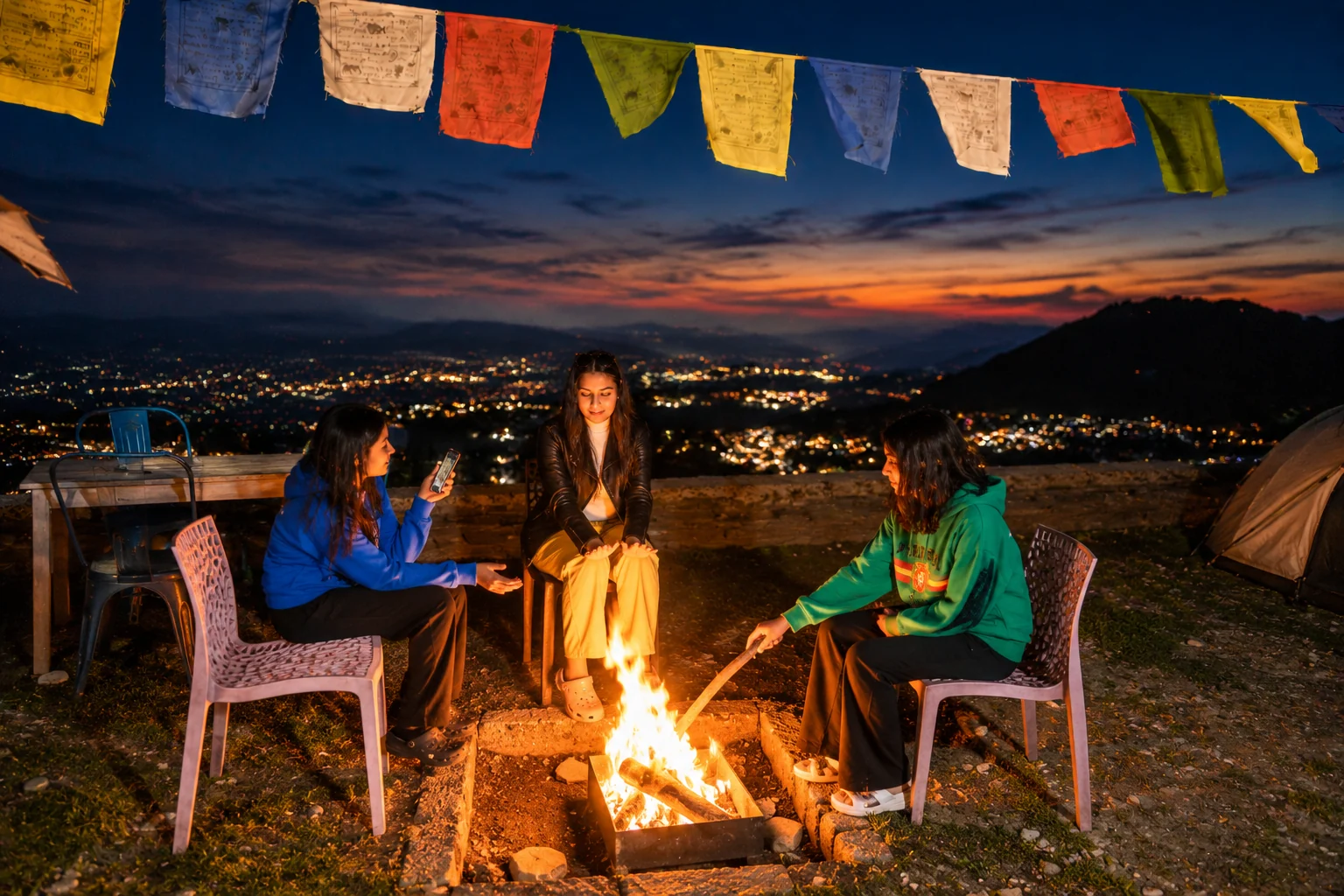
There is a practical argument for the cottage that has nothing to do with comfort. Sleeping 2.5 km below the top splits the climb into two halves. On the first day you walk about 3.5 km from Bhagsu Square, past Bhagsu Waterfall and up through the forest, which takes around three hours with stops. You arrive with the afternoon in hand: lunch, a rest, tea as the light changes over the Kangra Valley, and a bonfire if the weather and fire-safety rules allow.
The next morning, after breakfast, Triund is about 2.5 km and two hours away with short stops. You reach the ridge rested and early, before the day-hikers from town arrive in numbers. After a packed lunch on top, you walk down to Bhagsu, around 7 km, and a car takes you back to your hotel.
Which night is right for you
Choose a tent if you love camping, want to sleep on the ridge itself, are travelling with a group of friends and keeping costs low. Choose a cottage if warmth, a washroom and privacy are what make or break a trip for you, if you are travelling as a couple or with a parent, if it is your first trek, or if you are going in the colder months.
Want the warm room, the washroom and the quiet? See the private Triund trek with a heated cottage stay.
More planning: Triund Trek Difficulty: The Bhagsu Route · Triund Trek for Couples
Plan your private Triund trek
- Premium Private Triund Trek & Heated Cottage Stay · 2 days / 1 night: A dedicated guide, a bukhari-heated cottage room 2.5 km below Triund, mountain cottage meals and McLeod Ganj hotel pickup. Couple ₹12,500, solo ₹7,000, small group ₹5,000 pp, plus 5% GST.
Travel questions
Can I stay overnight at the top of Triund?
Overnight stays on the ridge are limited and managed by the Forest Department, and they are in tents. Our cottage is a room 2.5 km below the summit, and you walk to Triund the next morning.
Is there hot water and a proper toilet at the cottage?
Yes. The guest washroom is Western-style with running water from the tap and in the toilet. There is no shower; the staff bring hot water for your bath.
How warm is the cottage at night?
Each of the two rooms has a traditional bukhari, a wood-burning stove, and warm bedding. It is far warmer than a tent, though the trail outside can still be cold, wet or icy in winter.