 Himalayan Locals
Spiti Valley Temperature & Weather Month by Month (Kaza)
How warm or cold Spiti is in each month, when it snows, which roads are open, and what to pack: a month-by-month guide using Kaza as the reference.
By Himalayan Locals Editorial Team
Spiti's weather shapes a journey as much as its roads do. Summer brings comfortable afternoons; winter demands serious cold-weather planning and a flexible itinerary. This guide uses Kaza, at about 3,650 m, as the reference point to help you choose dates, pack sensibly and understand which roads are open in each season.
Choose a Winter Spiti departure
Our fixed group journey has eight mountain days and seven stay nights: a Shimla arrival rest day, two nights in Sangla, one in Tabo, two in Kaza and one in Kalpa. Double sharing, genuine 4×4 SUVs, breakfast and dinner, maximum 12 guests. Regular fares are ₹39,000 Shimla–Shimla or ₹43,000 Delhi–Delhi per person, plus 5% GST. The 26 December New Year departure adds ₹3,000 per person. The ₹5,000 booking advance is part of the package total.
View dates, stays and 4×4 group fares · Compare group and private Winter Spiti packages
Dates below are Delhi departures. Shimla guests join the next day. Online availability is checked before payment.
- 12 Dec 2026 · Delhi–Delhi · choose this departure
- 26 Dec 2026 · New Year · Delhi–Delhi · choose this departure
- 9 Jan 2027 · Delhi–Delhi · choose this departure
- 23 Jan 2027 · Delhi–Delhi · choose this departure
- 6 Feb 2027 · Delhi–Delhi · choose this departure
- 20 Feb 2027 · Delhi–Delhi · choose this departure
- 6 Mar 2027 · Delhi–Delhi · choose this departure
What is the weather in Spiti Valley like?
Spiti is a high, dry valley with a big difference between daytime warmth and overnight cold. A pleasant afternoon in Kaza is no guide to the night, and the passes and lakes are colder than the valley towns. Treat the figures below as planning ranges, not a forecast.
| Season | Typical temperature in Kaza |
|---|---|
| Summer (June to September) | Days around 10–25°C, nights around 5–10°C. Kunzum La and Chandratal are colder and windy. |
| Autumn (October to November) | Clear, cold days; nights fall below freezing as winter approaches. |
| Winter (December to February) | Nights regularly around −20°C, lower in cold waves; January is usually the coldest month. Sunny days can feel mild. |
| Spring (March to May) | Still cold in March with snow possible; milder days by May, with cold evenings. |
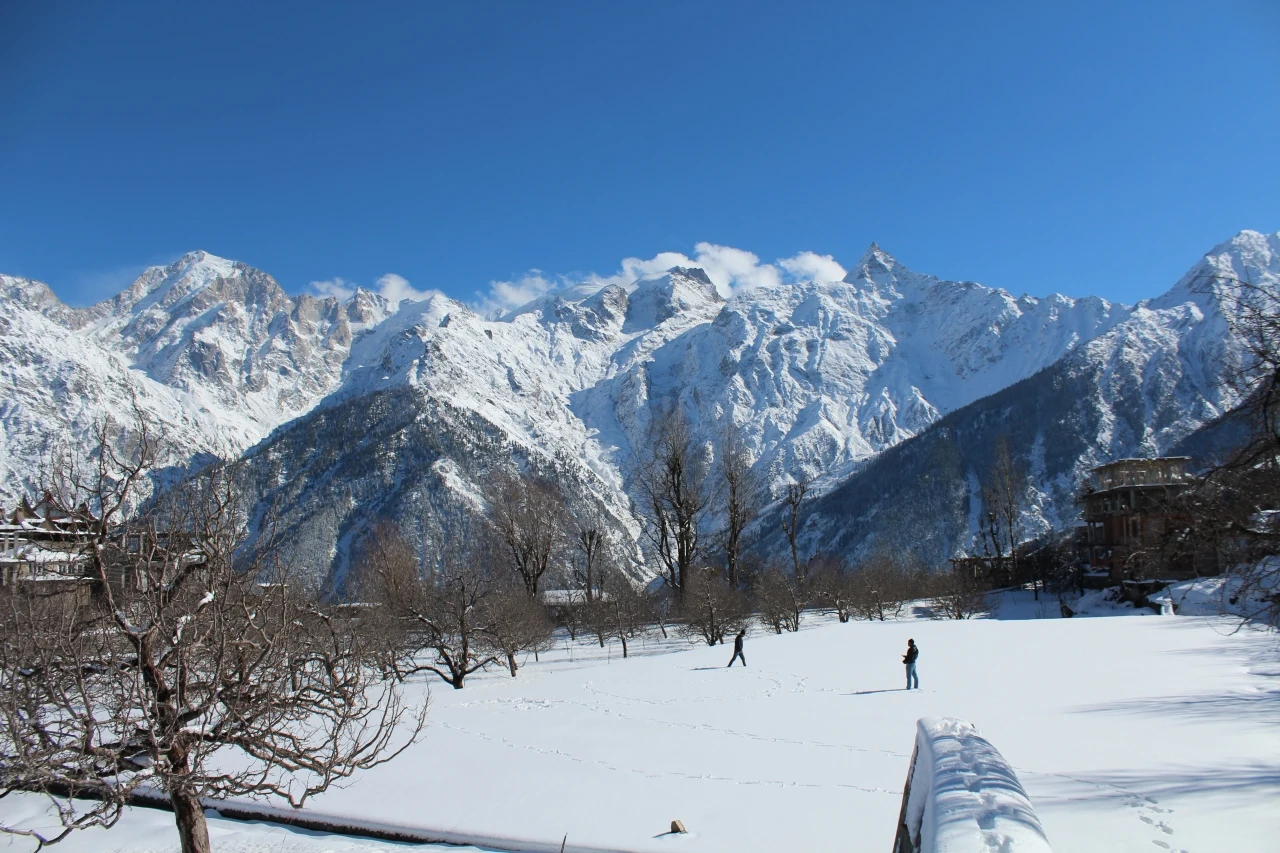
Spiti weather month by month
| Month | Conditions and what it means for your trip |
|---|---|
| January | Usually the coldest month, with severe overnight cold and possible snowfall. Book heated stays and keep the plan flexible. |
| February | Deep winter continues, with snow, ice and very cold nights. Sightseeing depends on local road clearance. |
| March | Gentler than peak winter but still cold, and snow is possible. Spring does not mean the high passes are open. |
| April | Milder days, cold nights. Plan around the valley and confirm each higher excursion separately. |
| May | Comfortable afternoons for village walks, chilly evenings. Kunzum and Chandratal may not be open yet. |
| June | The main summer season begins: mild valley days, cold nights. Confirm the Manali–Kaza road is open before planning that crossing. |
| July | Summer in Spiti, while monsoon rain affects the approach roads through Kinnaur and Lahaul. |
| August | Mild in the valley; leave room for landslide delays on the approach and avoid tight onward bookings. |
| September | Clear skies and cooler evenings; one of the best months for views. Pack warmer layers for nights. |
| October | Colder days and nights as winter approaches. Reconfirm high-pass access close to departure. |
| November | Increasingly cold. Once Kunzum closes, travel through Kinnaur and prepare for winter conditions. |
| December | Winter deepens; late December starts the coldest, snowiest period. Choose winter-ready stays. |
Going in winter? Read Spiti in December, Spiti in January and the Spiti in winter guide. For summer, see the best time to visit Spiti.
When does it snow in Spiti Valley?
Late December to February is usually the coldest and snowiest time, but fresh snowfall on a particular date is never guaranteed. November and March are gentler, though neither is reliably mild or snow-free. Settled snow makes beautiful scenery; active snowfall can close roads and change the plan, so a snow-focused trip needs spare time rather than a fixed checklist.
In winter, ask what "heated room" means at each stop: how the room is heated, the bedding, the washroom and whether there is running water. Not every property offers the same winter comfort.
Road access matters as much as temperature
- Winter: Spiti is reached only by the Shimla–Kinnaur road through Kalpa, Nako and Tabo. Snow, ice and short closures can still delay travel, so return the same way rather than planning a Manali circuit.
- The Manali–Kaza road over Kunzum Pass, at about 4,551 m, and the road to Chandratal close for winter. Reopening depends on snow clearance, not a fixed date.
- Monsoon: rain mostly stays south of Spiti, but the Kinnaur approach is prone to landslides and delays. Keep a buffer night before a flight.
How to check the Spiti weather forecast
When you search for Spiti weather today, check the place and update time; a district forecast is not a forecast for every village and pass on your route. Look at the overnight low as well as the daytime high, check snow, rain and wind warnings, confirm both the approach road and any excursion road, and agree on a fallback plan with your operator before you leave.
Official forecasts and warnings are published by the India Meteorological Department.
Pack for the coldest part of your trip
- Summer: a base layer, fleece, warm jacket, windproof outer layer and warm socks. Nights are cold even in July.
- Winter: thermals, an insulated down jacket, warm gloves, a warm hat and insulated, grippy footwear.
- Every day: keep a spare layer at the top of your bag, not packed away with the luggage.
- Sun: sunglasses and sunscreen; the high-altitude sun is strong in every season.
Plan your Spiti journey with Himalayan Locals
Choose summer for comfortable valley exploration and the Manali side, or winter for a cold-weather journey through Kinnaur. Our private Winter Spiti Explorer starts at ₹37,500 per person plus 5% GST for six guests, with heated stays; the private Premium and Luxury journey adds upgraded stays. Compare Winter Spiti packages.
Travel questions
What is the temperature in Spiti Valley?
It depends on the season. In summer Kaza sees days around 10–25°C and nights around 5–10°C. In mid-winter nights regularly fall to around −20°C, and lower in cold waves.
Which is the coldest month in Spiti?
January is usually the coldest month, with very cold nights and possible snowfall.
When does it snow in Spiti?
Most snow falls from late December to February, though November and March can also see snow. Snowfall on a specific date is never guaranteed.
Is Spiti open in winter?
Yes, by the Shimla–Kinnaur road through Kalpa, Nako and Tabo. The Manali–Kaza road over Kunzum Pass and the Chandratal road close for winter.
What is the best time to visit Spiti for good weather?
June to September for comfortable valley days and open passes; September often has the clearest views. Winter suits travellers who want snow and quiet and are prepared for the cold.