 Himalayan Locals
Triund Trek Packing List: What to Carry in Every Season
Shoes, layers, water and ID first, then what to add for the monsoon, winter and a night in the mountains: a practical Triund packing list from McLeod Ganj.
By Himalayan Locals Editorial Team
A practical Triund trek packing list starts with grippy shoes, warm layers, rain protection, drinking water, snacks and a photo ID. Add seasonal gear on top rather than carrying everything you own. This guide separates the everyday essentials from what you need for the monsoon, winter and a night on the mountain.
Part of our Triund Trek Guide. Trekking with us: the daily small-group trek from ₹4,500 + GST, or a private trek with a heated cottage.
What to carry for the Triund trek
Triund ridge is about 2,850 m above sea level and roughly 10°C colder than Dharamshala town, so a warm afternoon in McLeod Ganj should not decide what you carry uphill. Pack the same core kit even for a day hike.
- Footwear: trekking shoes with reliable grip that you have already walked in, and a spare pair of socks.
- Clothing: a quick-drying top, a fleece or warm mid layer and a waterproof jacket. Avoid cotton, which stays wet.
- Water and food: a refillable bottle and easy snacks such as nuts, dried fruit or bars.
- Sun protection: sunglasses, sunscreen and a cap.
- Light: a head torch and a charged phone with a power bank.
- Personal kit: regular medicines, blister plasters and basic first aid.
- Documents and waste: photo ID, some cash and a bag to bring your rubbish down.
Seasonal additions to your packing list
| Season | Conditions and what to add |
|---|---|
| March–April | Cool, with snow patches possible early in the season. Add a warm jacket, gloves and spare dry socks. |
| May–June | Warmer walking, with possible showers or storms. Add a sun hat, breathable clothing, a rain shell and enough water. |
| July to mid-September (monsoon) | Rain, mist and slippery stones. Add waterproof trousers, a pack liner and dry spare clothes in a bag. |
| Late September–November | Clear views and cold evenings. Add an insulated jacket, a warm cap and gloves. |
| December–February | Snow and ice possible on the upper trail. Add thermals, an insulated jacket, warm gloves and micro-spikes if your guide advises. |
Shoes and layers come first
Choose shoes you have already worn on long walks and check the soles before leaving McLeod Ganj. Smooth-soled trainers are the biggest avoidable risk on the stone steps and the descent. Dress in layers: a quick-drying base, a fleece for warmth and a shell for rain and wind, with an insulated jacket when the forecast calls for it. Keep the warm layer at the top of your bag, take a layer off before you sweat, and put it back on when you stop.
Rain and snow need different preparation
Monsoon: keep a dry set
From July to mid-September, pack spare socks and clothes in a dry bag or liner, and protect your phone, ID and power bank. Keep the rain jacket where you can reach it without unpacking. Rain gear helps, but it does not make a slippery trail safe; be ready to postpone.
Winter: ask about traction
From December to February, ask whether there is snow or ice on the trail and whether micro-spikes are needed. Carry a warm cap, gloves, thermals and an insulated jacket, and a head torch because the light fades early. Trekking poles help, but they do not make an icy path safe. Agree on a turnaround time with your guide; reaching the ridge is always subject to safe conditions.
Water, snacks and medicines
Know how much water you will carry and where you can refill before you start, and do not drink untreated stream water because it looks clear. Keep some food spare in case the walk takes longer. Keep your medicines, head torch and phone in your own bag where you can reach them.
Entry rules belong on your checklist too
- Entry fee: ₹100 per person for a day hike (October 2026). Carry cash or a UPI app.
- Photo ID for everyone in your group; details are recorded at the forest check post.
- Visitor limit: since October 2026 only 1,000 entry slips are issued a day.
- Alcohol is not allowed in the Triund area.
- Carry all litter back down, including wrappers and tissues.
What we provide on our Triund trek
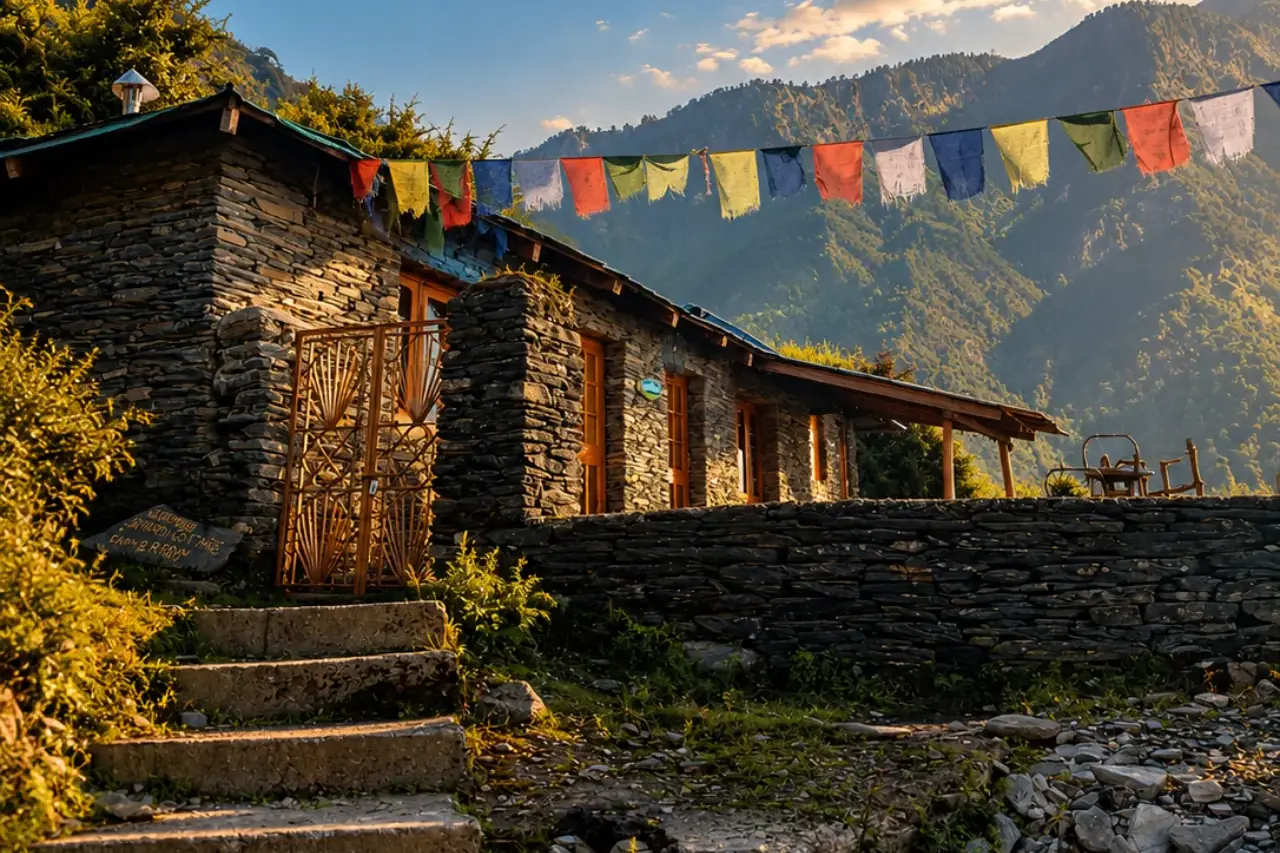
On our trek, trekking poles and drinking water are provided, your guide carries up to 5 kg of your things, and you sleep in a bukhari-heated cottage about 2.5 km below the ridge, not in a tent. So you walk with a light daypack: water, medicines, a rain jacket and a warm layer. For the cottage night add a dry change of clothes and basic toiletries; bedding is provided.
Want to walk with a light daypack? See the guided Triund trek where your guide carries 5 kg.
More planning: Triund Trek Distance, Height & Starting Points · Best Time for the Triund Trek · Triund Trek Rules, Entry Fee & Camping · How to Reach Triund from Delhi · Triund Trek in Winter · Triund for Beginners & Families · Triund Trek Cost in 2026 · Beyond Triund: Snowline & Indrahar · Where to Stay on the Triund Trek · Triund Trek Difficulty: The Bhagsu Route · Triund Trek for Couples · Triund Trek Daily Departure · Triund Trek Solo · Triund Night View & Overnight Stay · Triund Trek Camping 2026
Triund trek package: dates, prices & cottage stay
- Triund Trek Package · Private Guide & Heated Cottage · 2 days / 1 night: A dedicated guide, a bukhari-heated cottage room 2.5 km below Triund, mountain cottage meals, a trail energy kit and pickup from your stay. Daily departure ₹4,500 pp, private group (3–6) ₹5,500 pp, couple ₹12,500, solo ₹7,000, plus 5% GST.
Travel questions
What should I carry for the Triund trek?
Trekking shoes with good grip, layers including a warm jacket and a rain shell, a water bottle, snacks, sun protection, a head torch, personal medicines, photo ID and some cash.
What shoes are best for Triund?
Trekking shoes with deep grip and ankle support that you have already walked in. Smooth-soled trainers are risky on the stone steps and the descent.
Do I need micro-spikes for Triund in winter?
Only when the trail is icy. Ask your guide close to your date; from December to February snow and ice are possible on the upper trail.
Is water available on the Triund trek?
Do not count on it. Carry a refillable bottle and agree where you will refill. Drinking water is provided on our trek.